Smart TCG: First Impressions
Our first look at a tech-filled TCG.
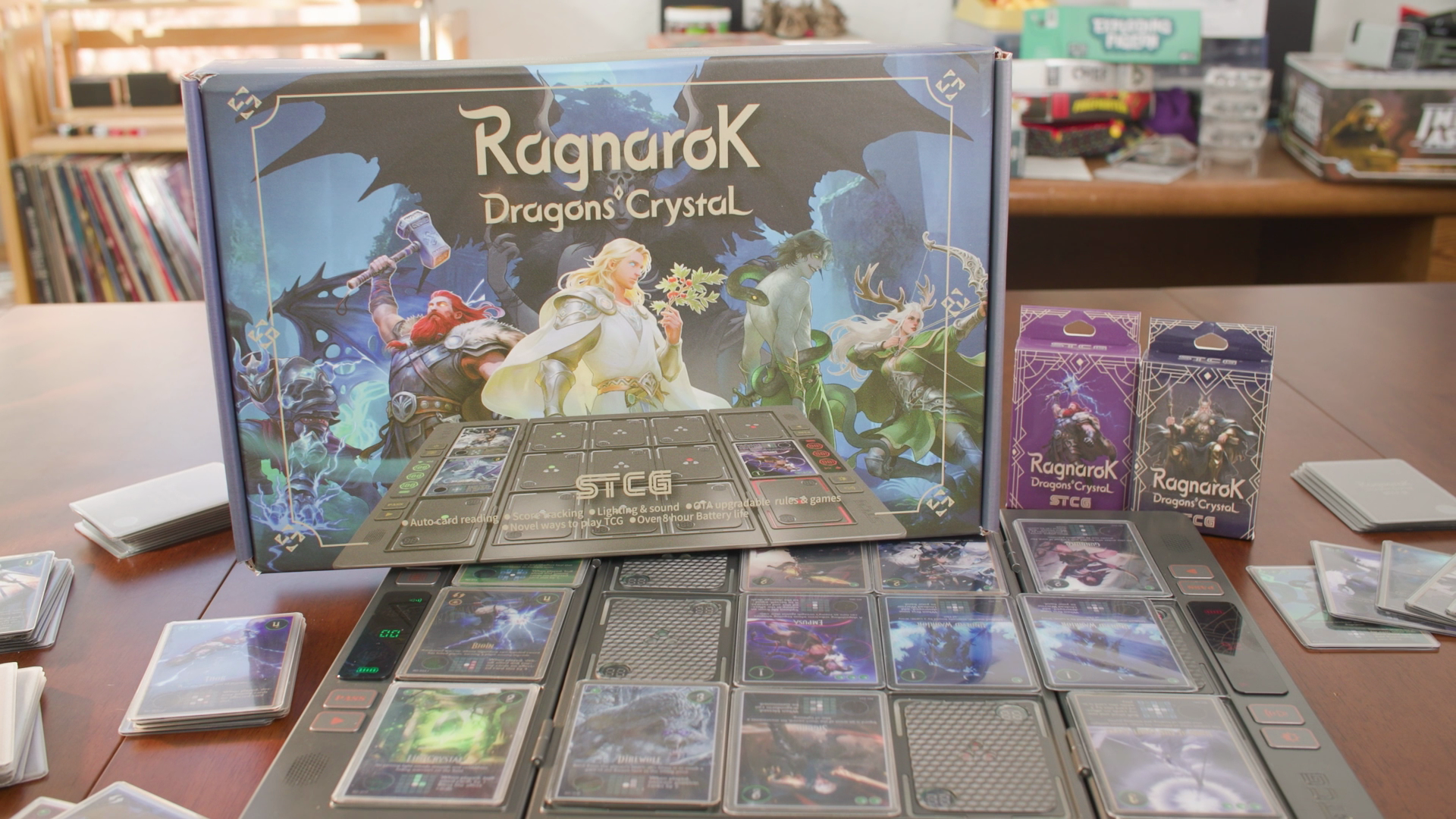
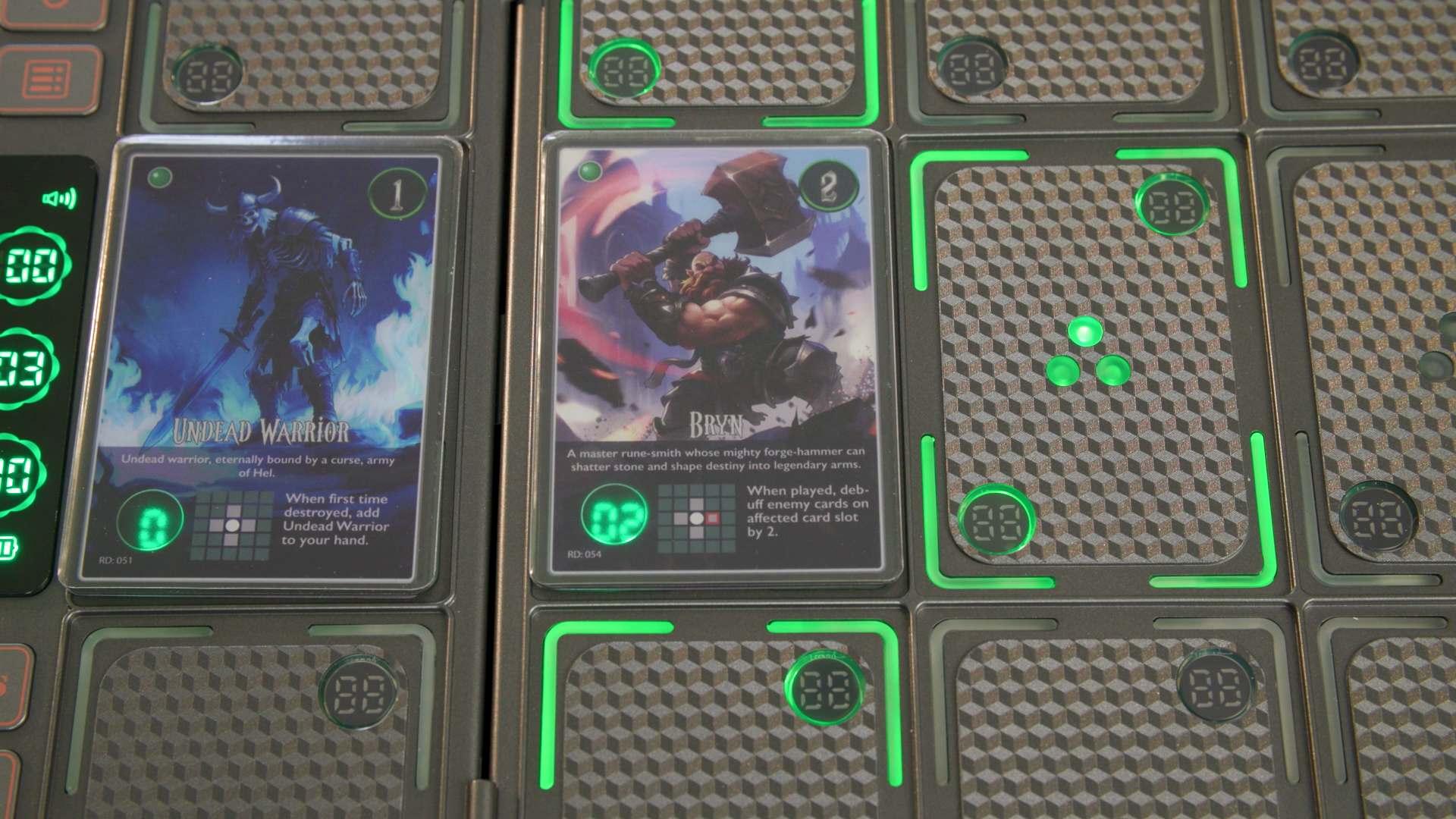
An upcoming card game that is filled with NFC tech. Deckbuilding gets paired with grid control ideas, as you try to conquer the most land and have the most overall strength before the game ends. The board automatically keeps track of cards’ health and abilities upon play, with sound effects! 15-20 minutes, 2 players.
Video published March 2nd, 2026
-
![]()
Grid based gameplay.
-
![]()
Unique units all have different abilities.
-
![]()
Units conquer land!
This is a sponsored post.How many times played
2 Player: 2x
Need to learn how to play? Or want more reasoning for our points? Our review video’s got you!
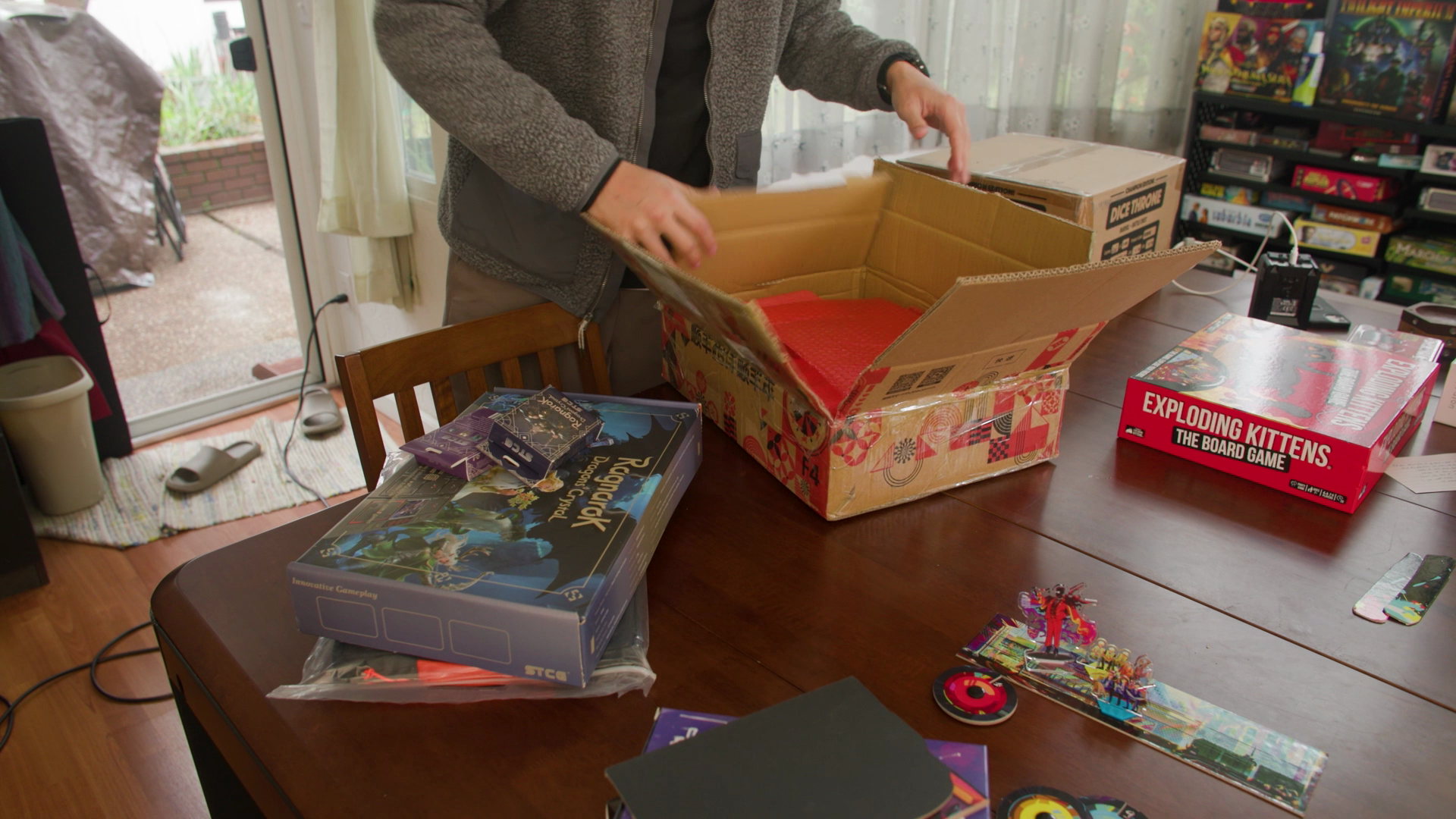
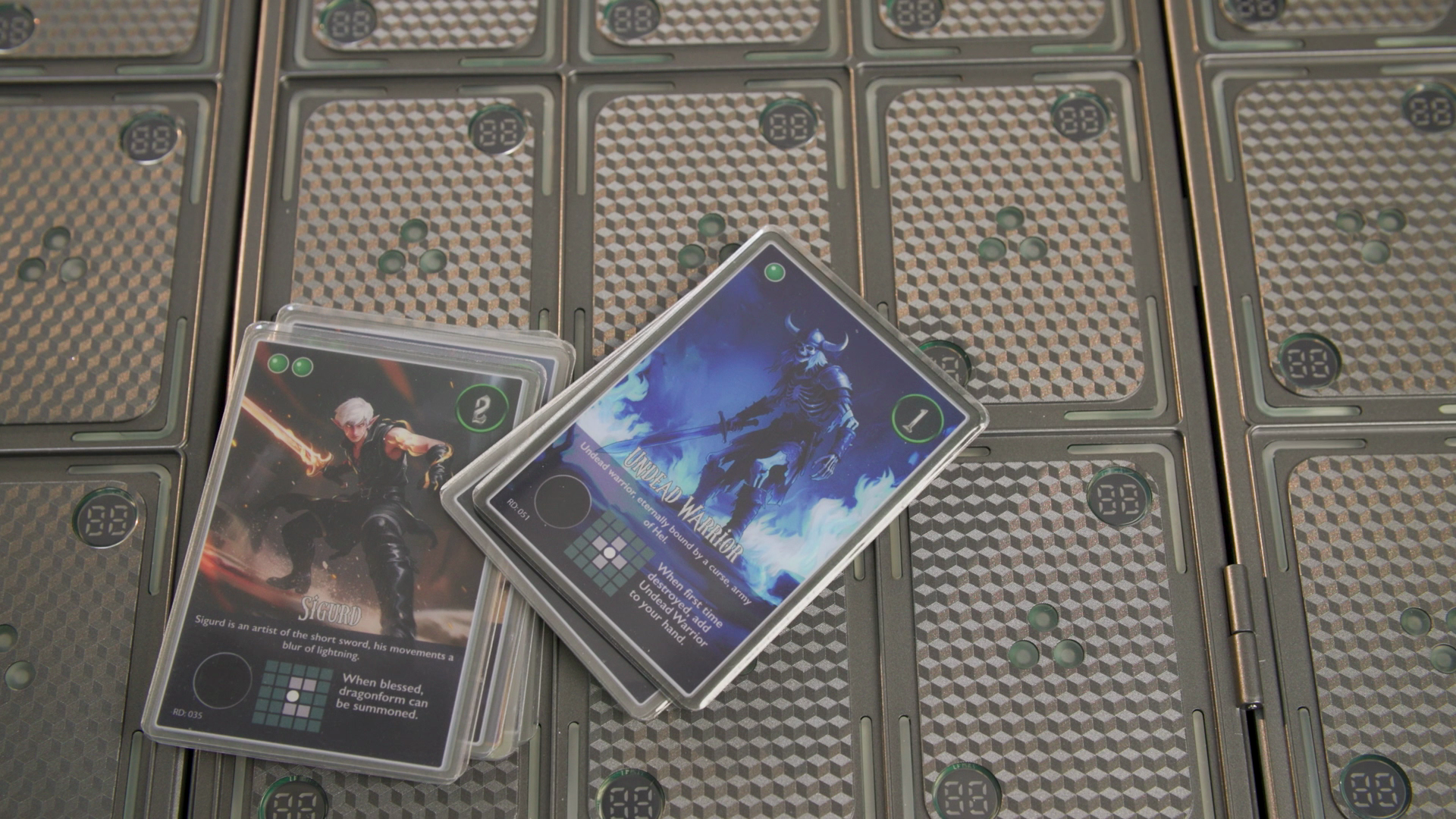
Quick How to Play Explanation:
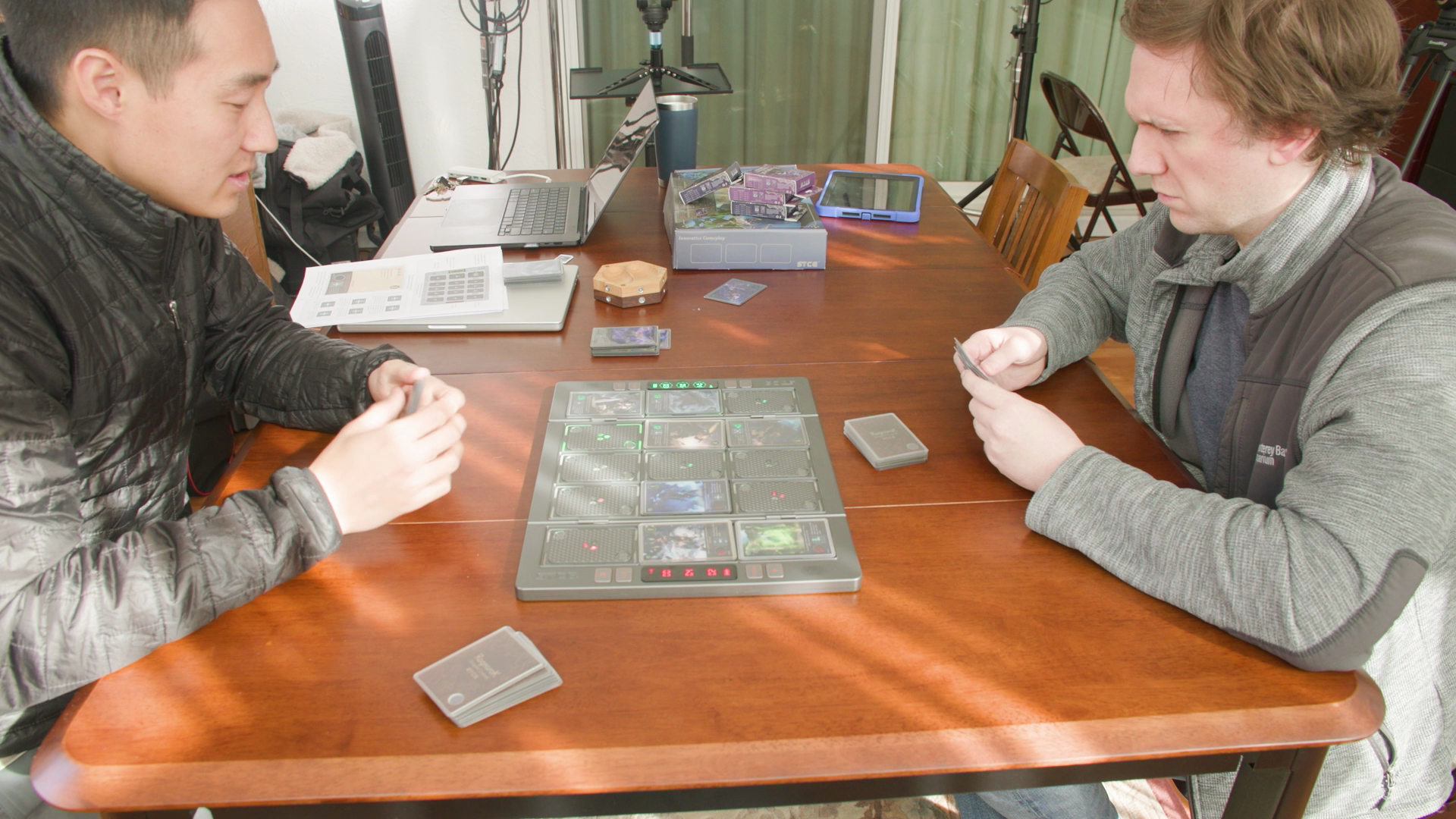
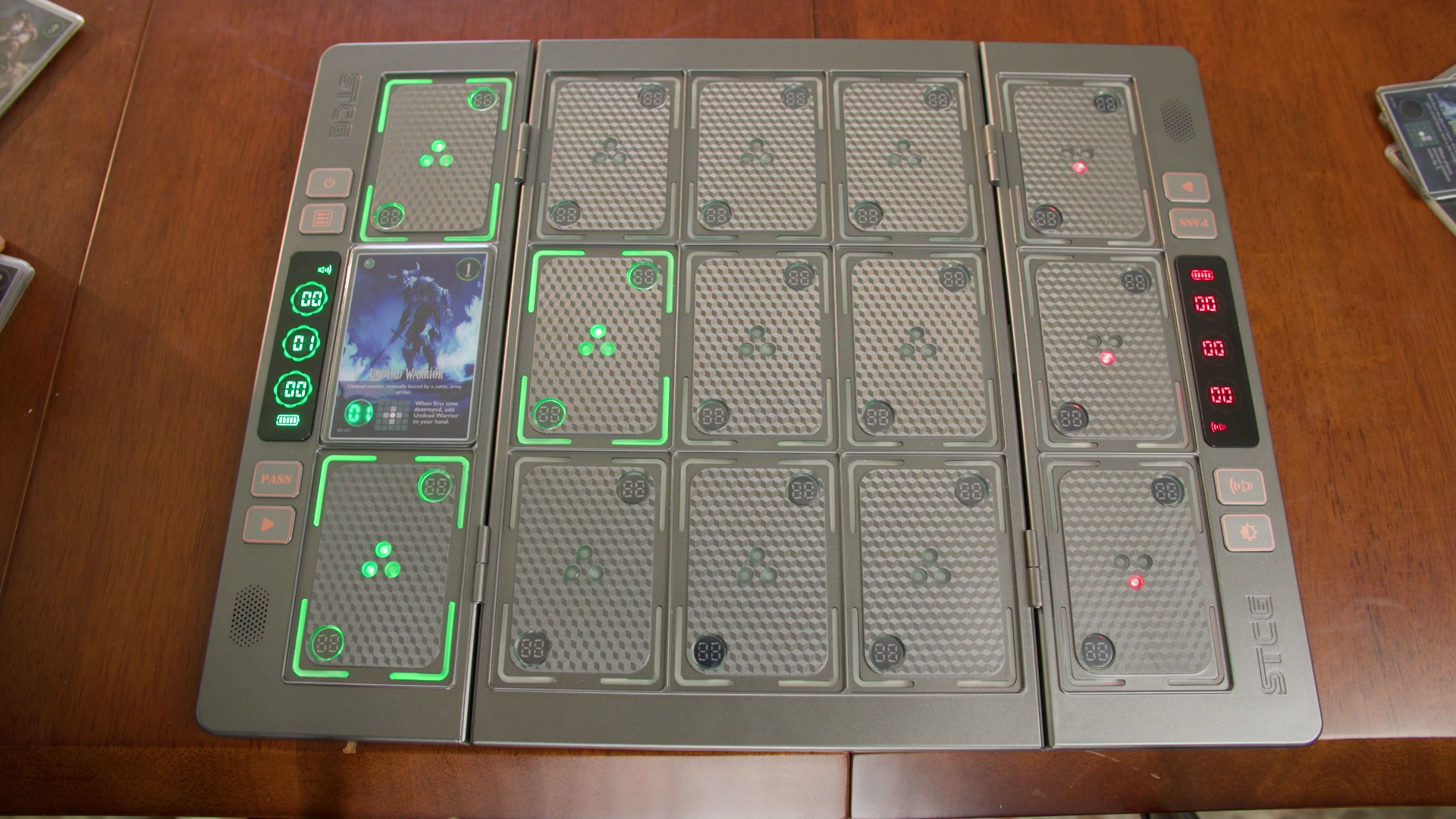
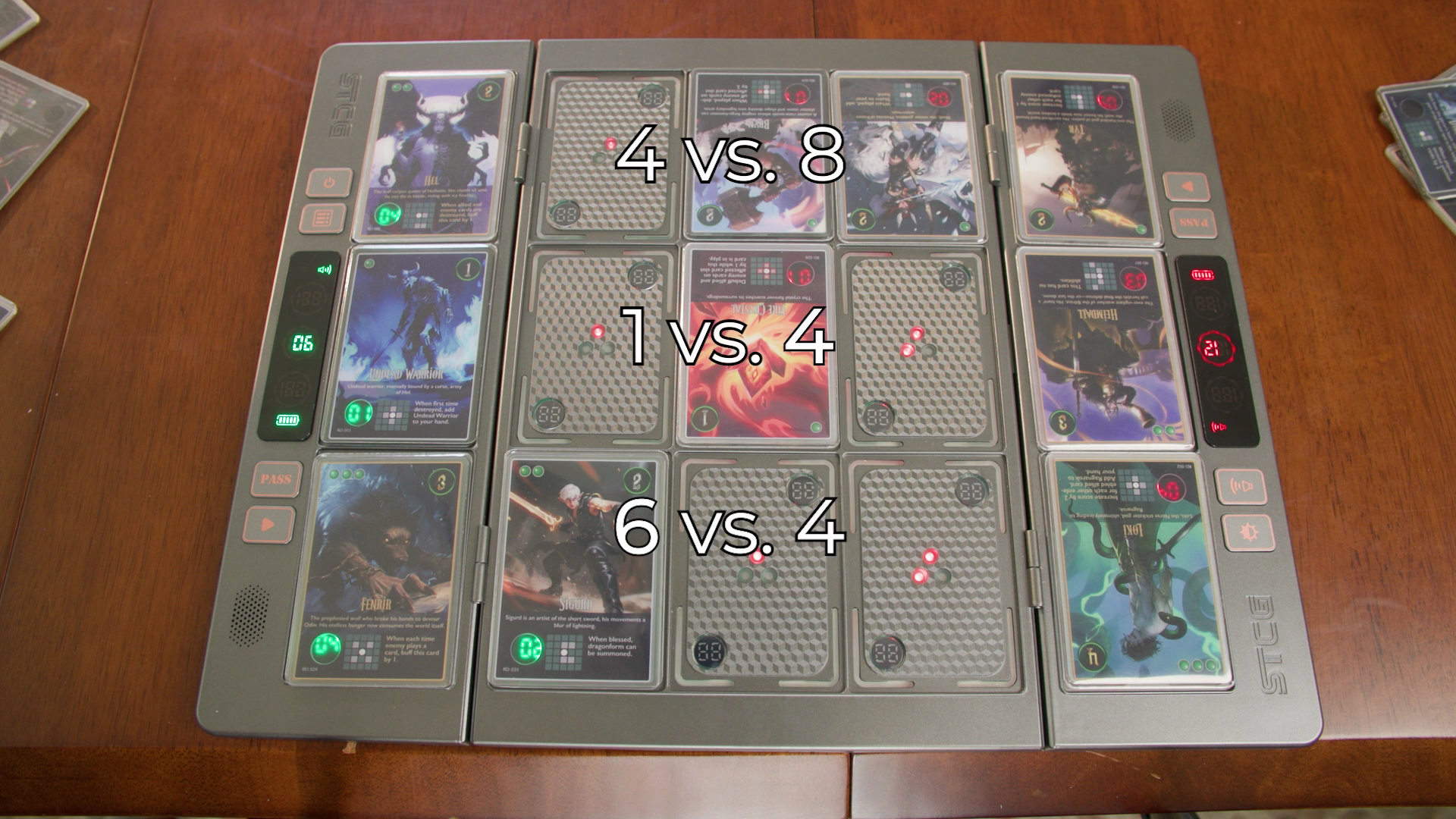
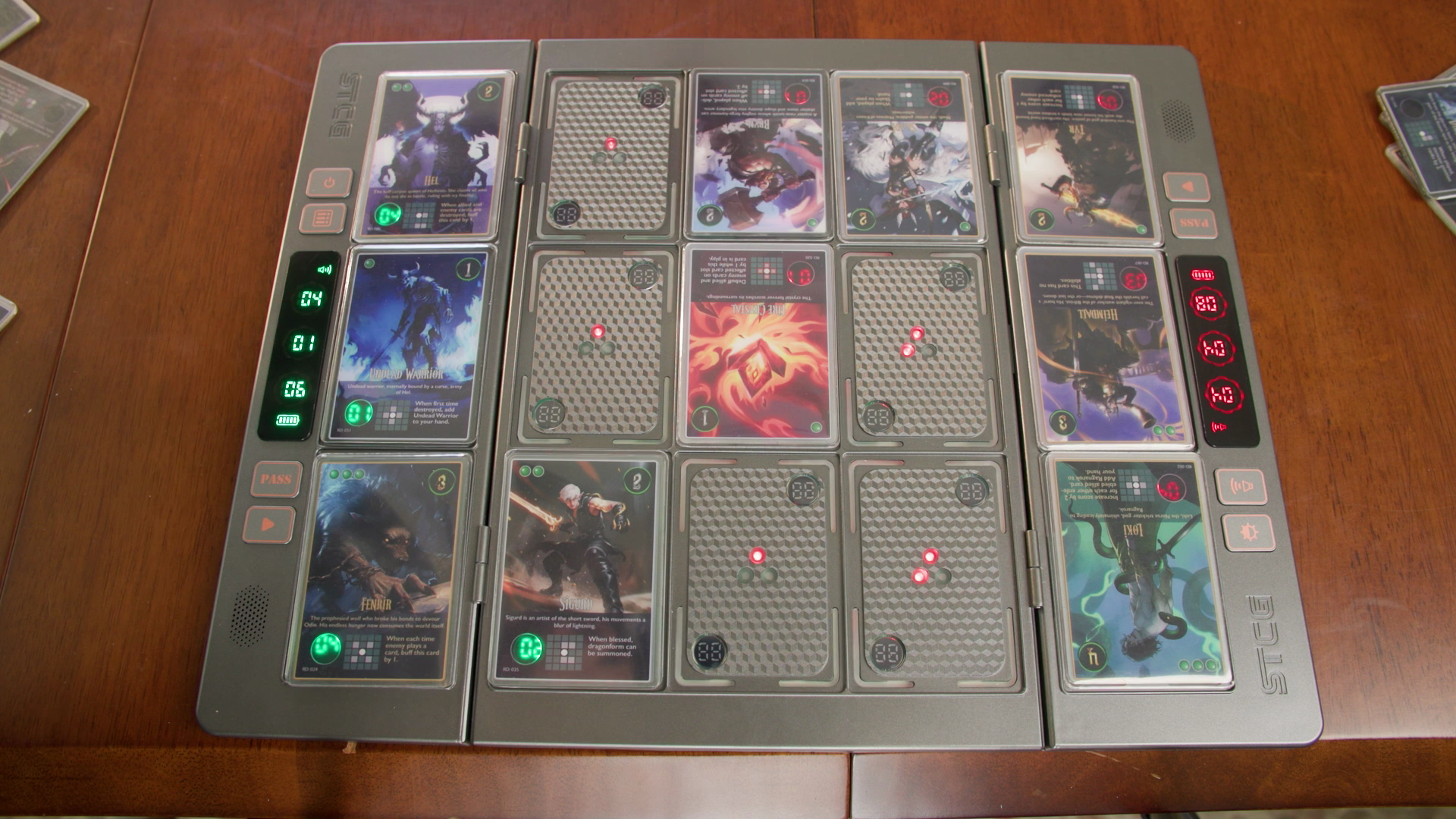
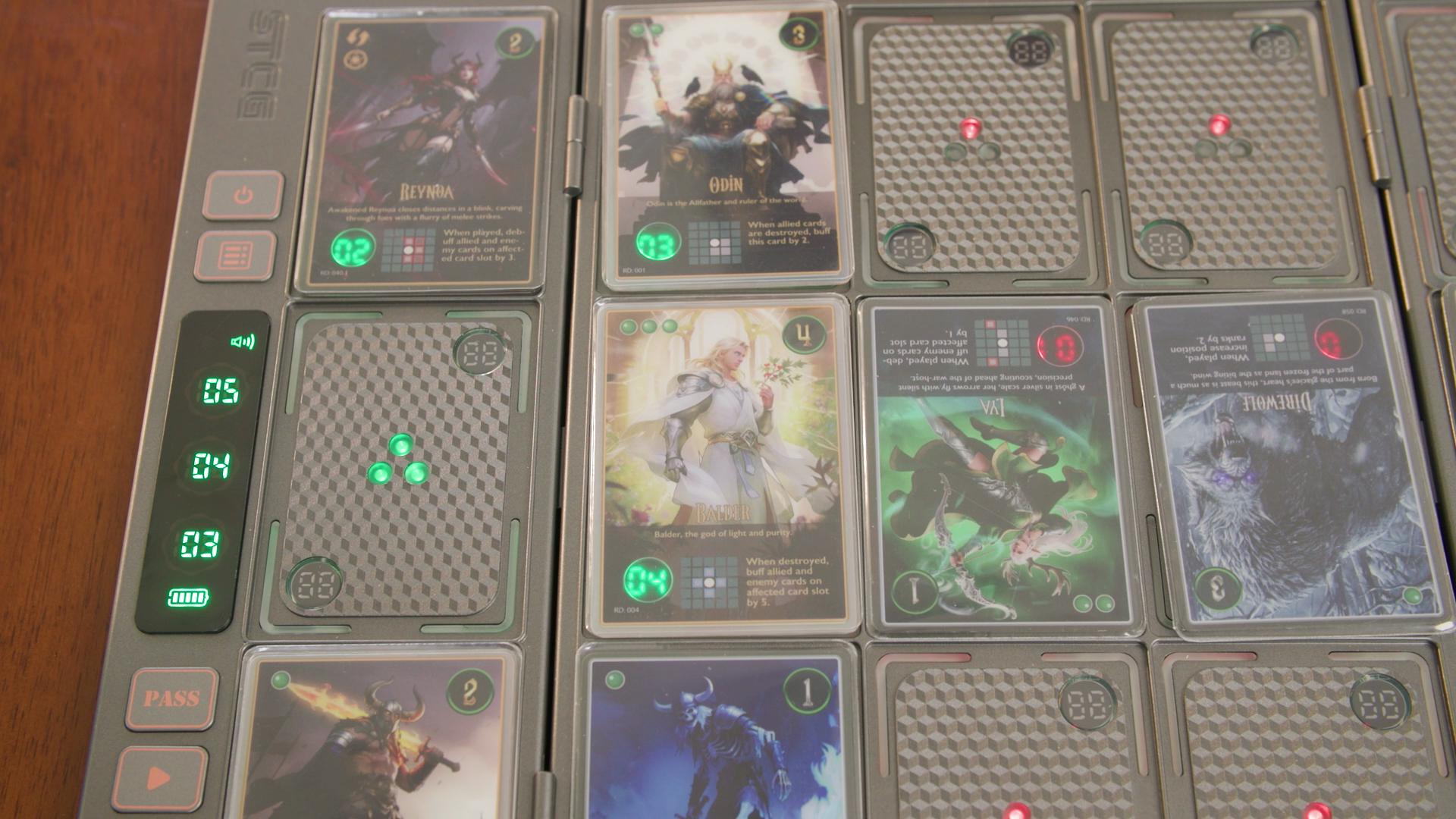
There’s 3 rows, all with 5 cards. And the goal is to dominate rows in strength by tallying up the cards there, by the time the game ends, that is usually when no one can play any more cards from their 16 card deck.
On a turn, all you do is draw a card from your deck, then play a card in one of the slots!
Cards usually have a rank between 1-3, meaning you can place them down in a matching or higher level on the board you own. So, if you have a level 1, you can place it in a level 1, and also 2. But if you have a level 2, you can place it in a 2 but not 1.
How you do you get more level 2 areas? Well cards will usually capture areas around them, adding 1 level to all the grey boxes the card denotes! Some cards can add more levels, some cards can buff those around them, some cards can destroy stuff around them, err essentially almost all cards we’ve seen do something when played.
After you played a card, the turn passes your opponent, where they draw and play a card, and you just keep doing this cycle until both of you PASS in a row. Passing is voluntary if you don’t want to play anything, and mandatory if you literally ran out of cards in your deck or can’t play anything.
After 2 players pass in row, the system will do the calculations! You only score a row that you have more strength in, then you add up your won rows together, and whoever has the higher strength, wins!
Component Cool
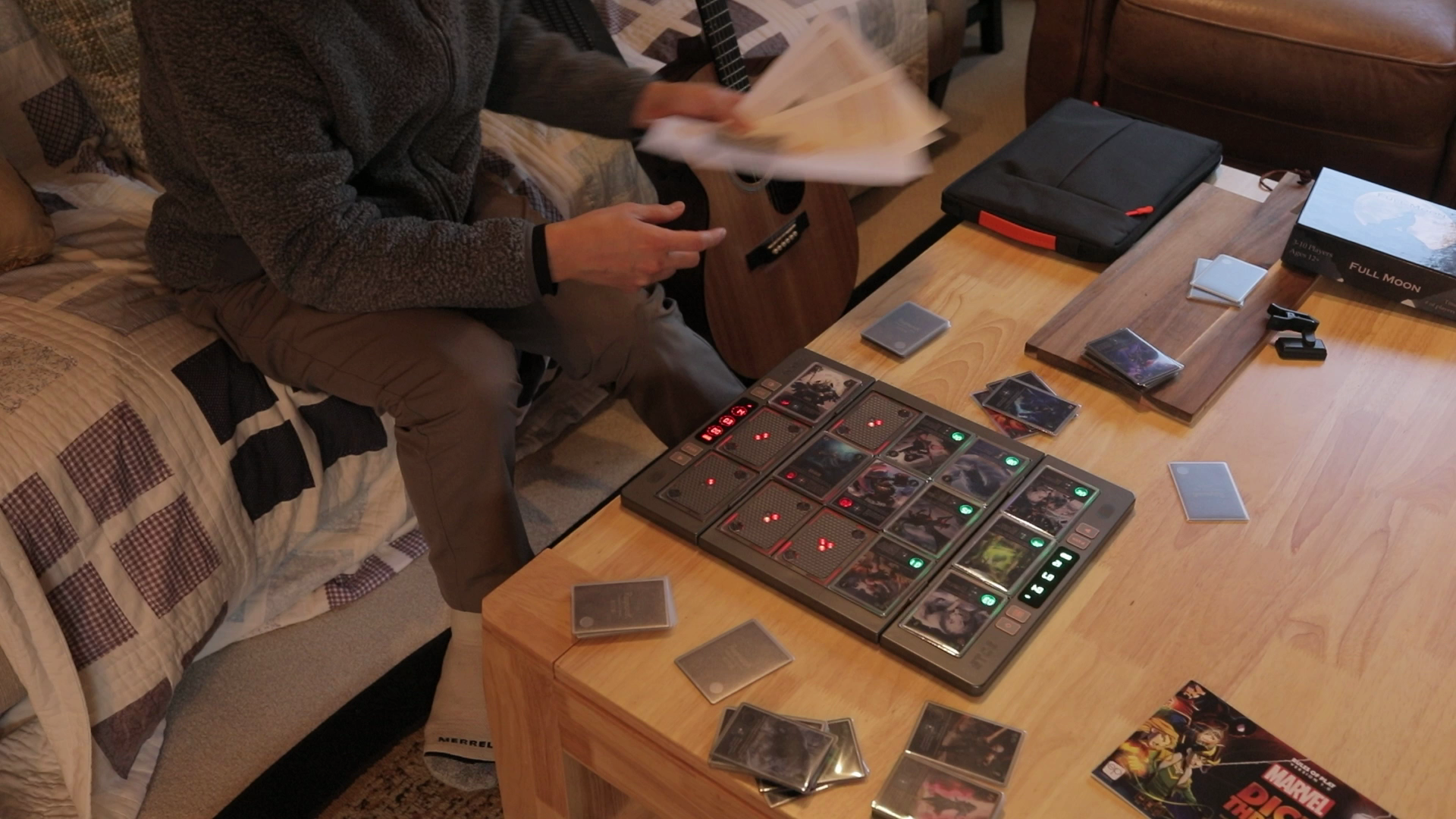
Big board is really nice to use!
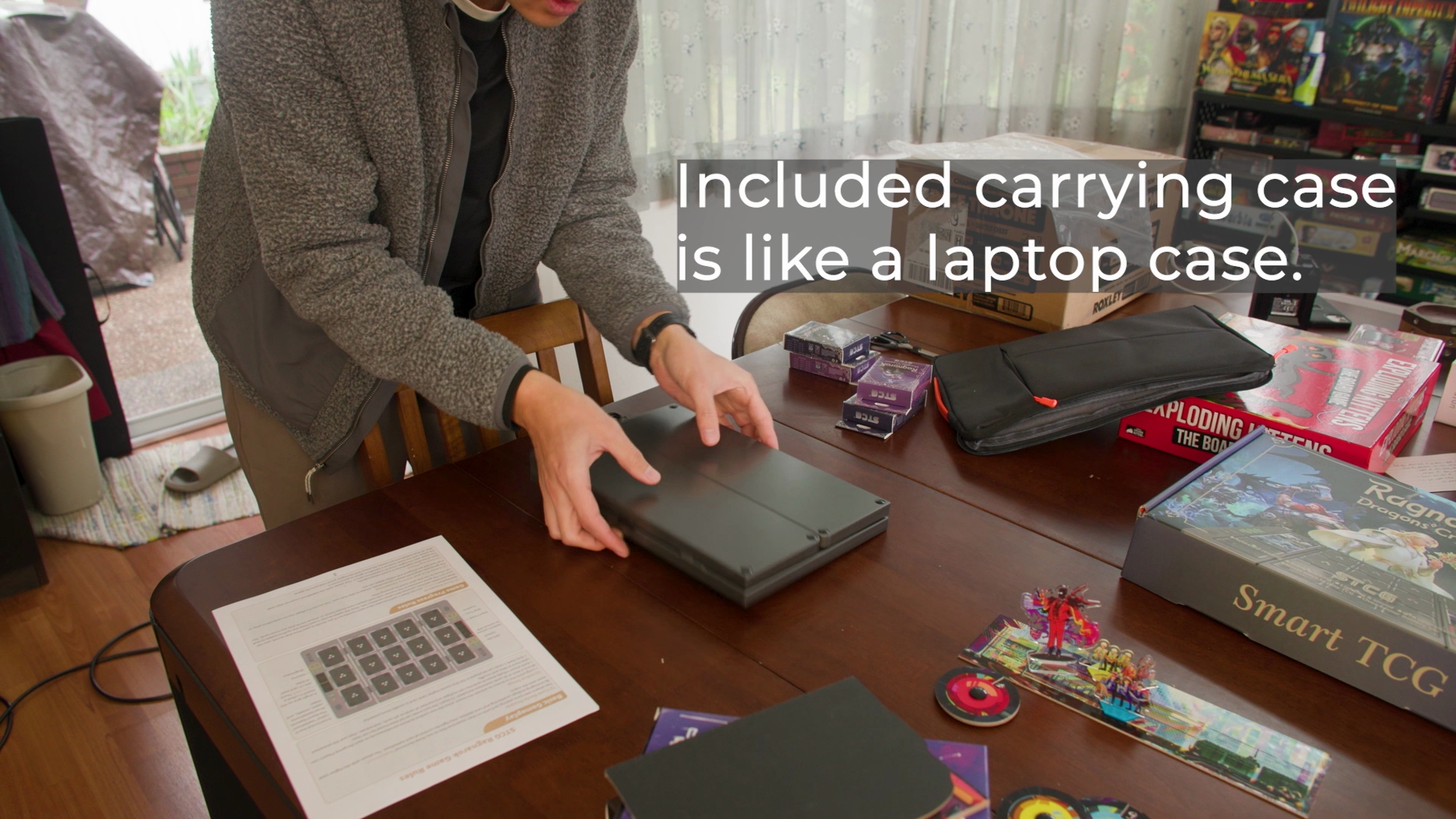
Folds up nicely w/ included case
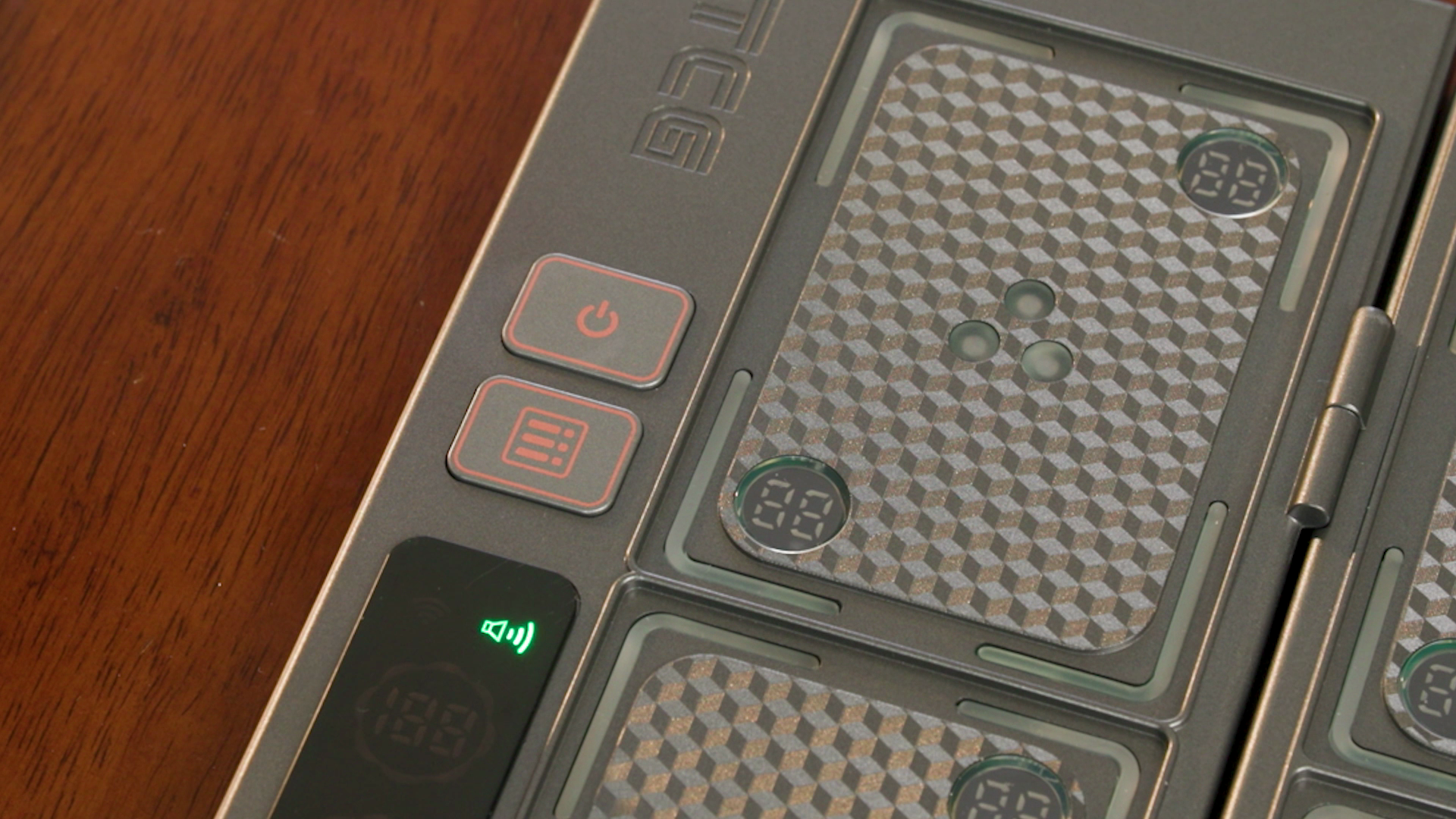
Has some solid weight with rubber bumpers to prevent movement while playing
Buttons feel chunky and trigger sound effects, won’t be hit accidentally
Can lower volume and adjust brightness
Art is nice typical digital game fare (no shortage of fan service)
Easy to tell characters apart
Box orientations and colors tell a lot about capabilities without much writing
Cards feel like thick tiles (prototype), pre sleeved
Imagine that cards have to be thick if there’s gonna be NFC chips inside
Cards are allowed to be thick with only 16 card decks
Gameplay Cool — Nice balance between playing for strength vs. ground
If focus too much on strength, your opponent will take the viable places, you have to pass because can’t play anything
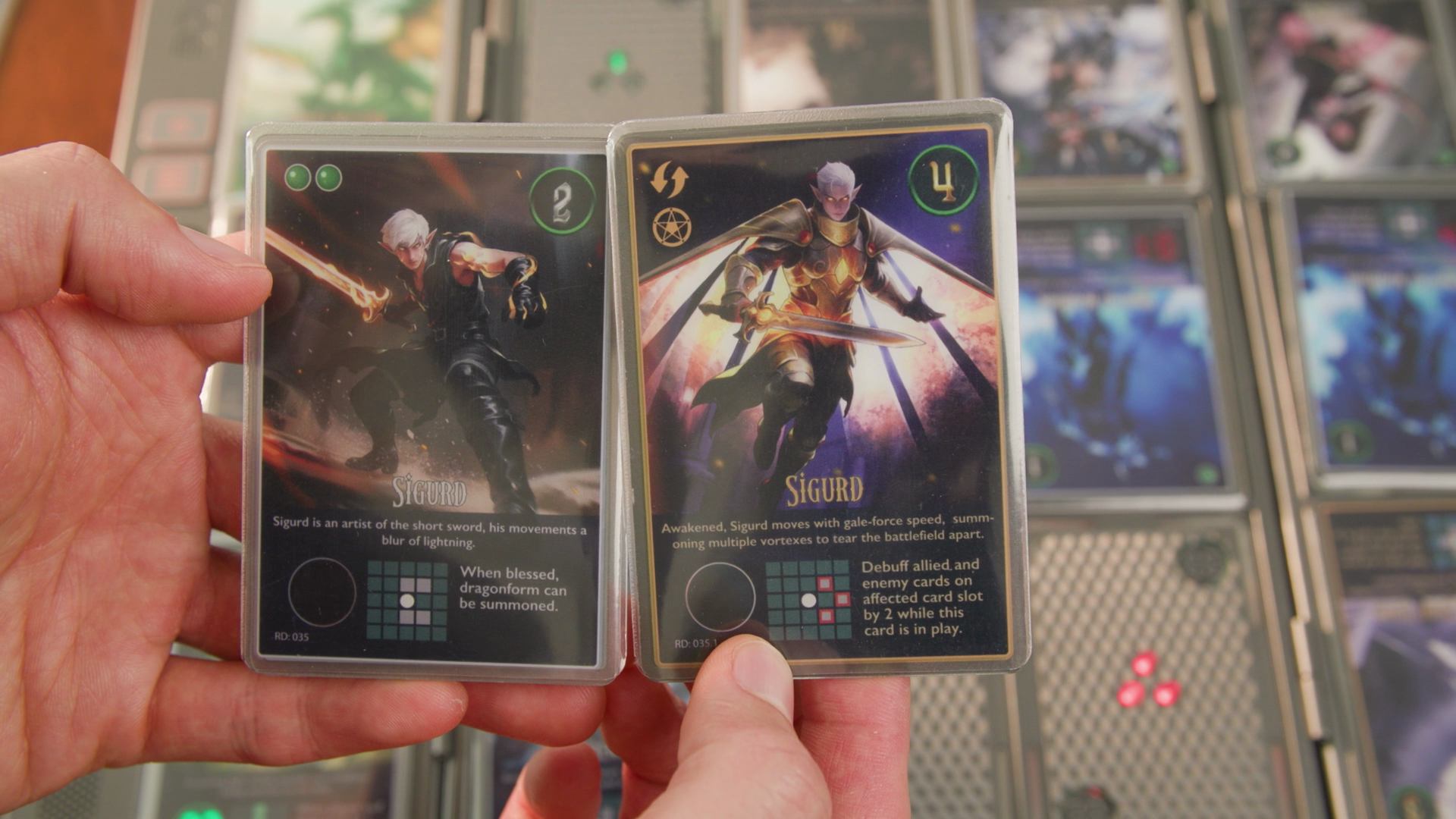
Positioning matters with how every card has some orientation of squares it affects
We imagine that the more you play the game, the more you can play around certain shapes
e.g. Level 2 bird that always destroys something to the right of it
Gameplay Cool — Card Diversity
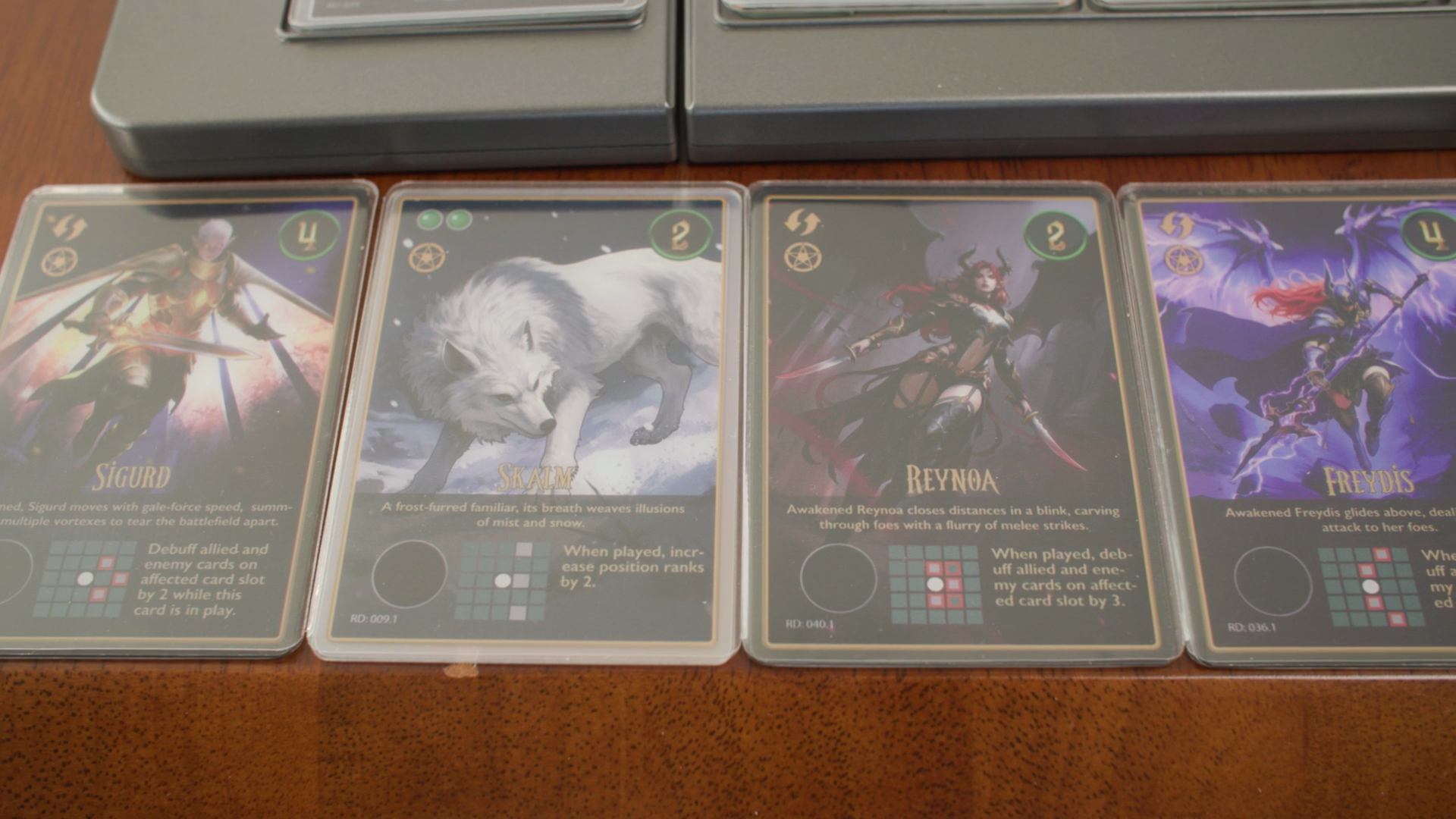
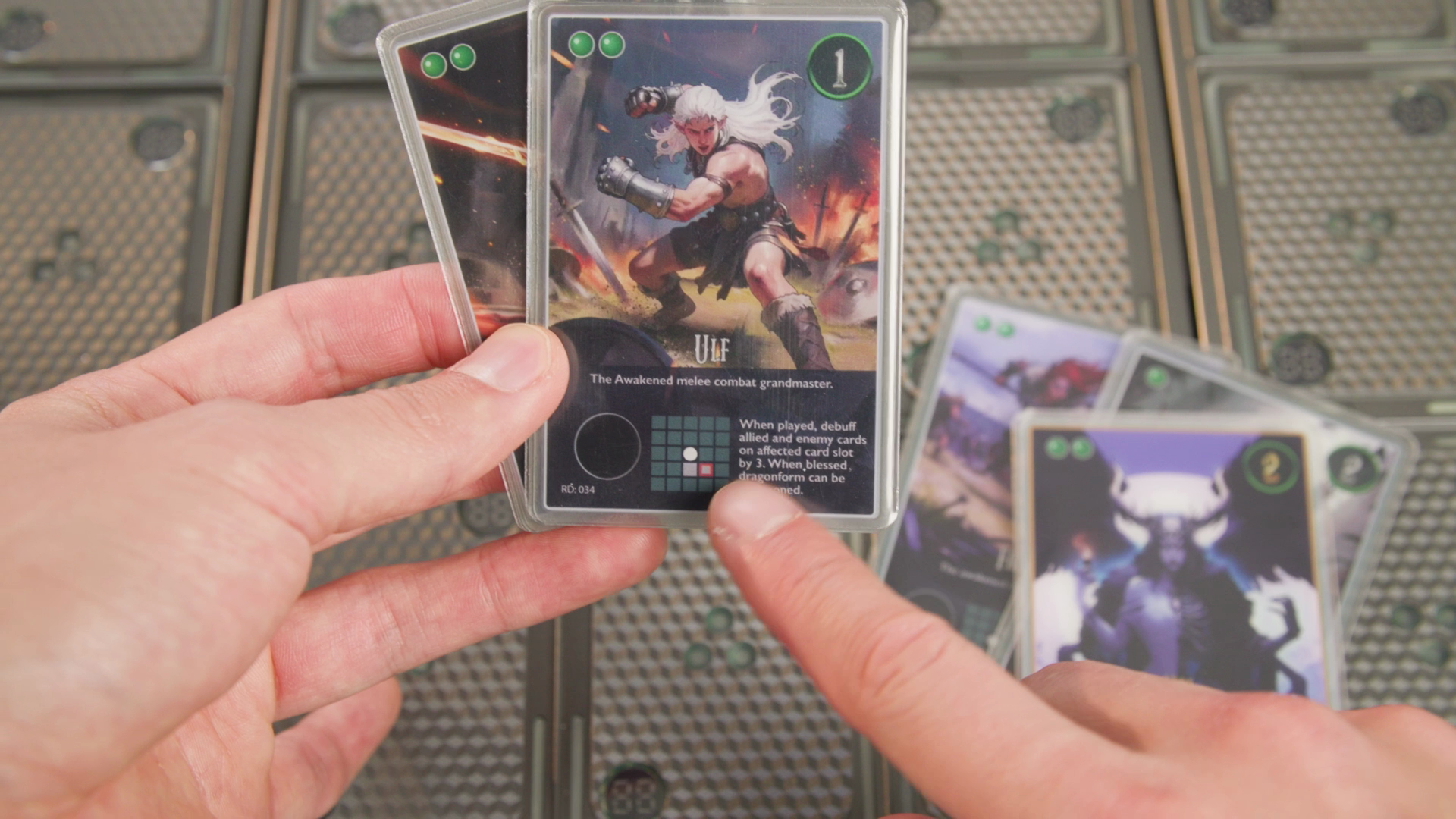
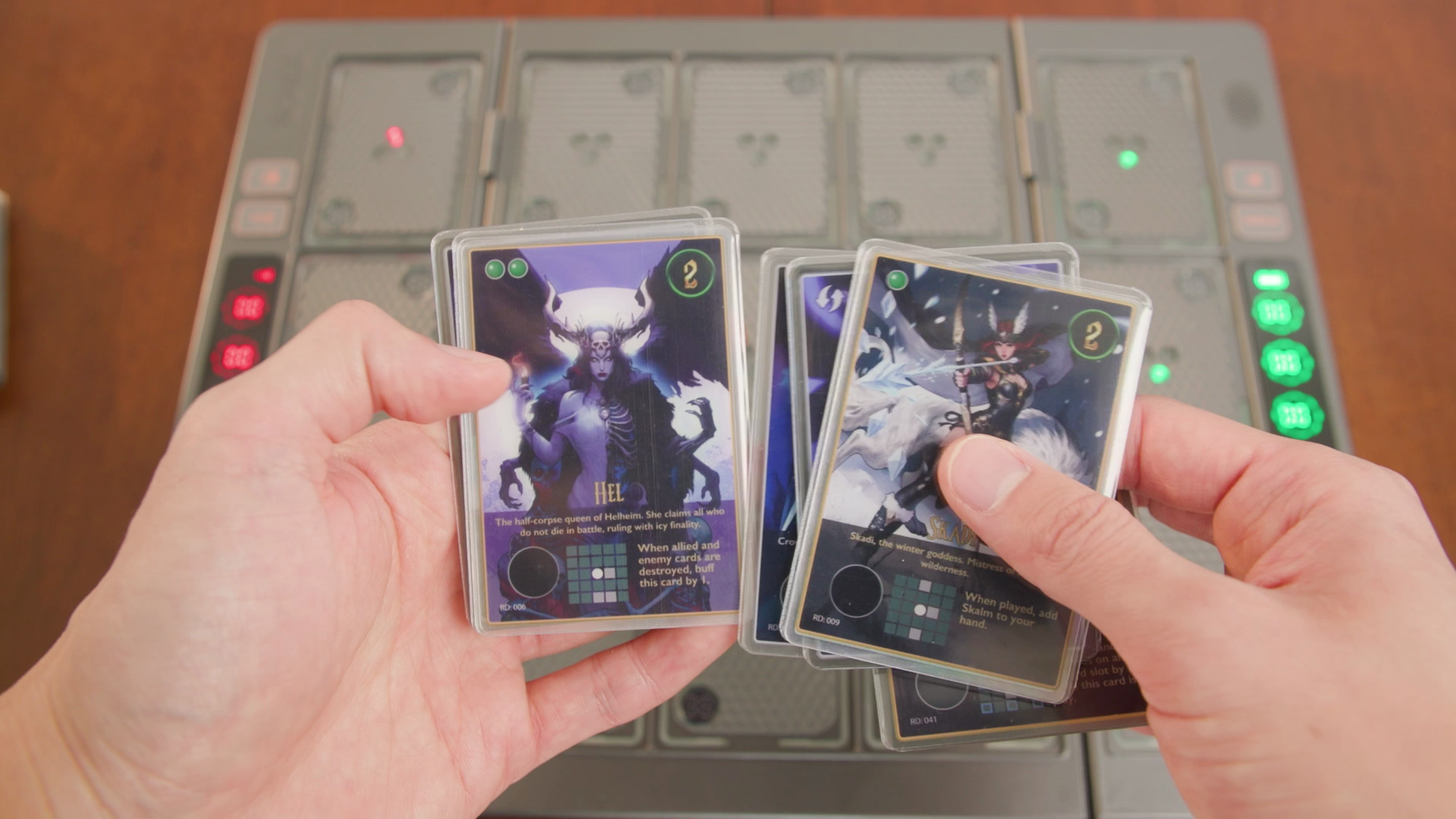
Cards all feel unique with differing rank, strength, ability, and how ability exerts self on grid
e.g. Thor to damage others
e.g. Support type ‘Molin’ to increase other cards around them’s strength
e.g. Ramping ‘Hel’ to slowly get stronger as other cards die
e.g. Cards that help EVERYTHING around them when slain, so you try to keep position around them
e.g. Crystals that let you transform other cards into their specific dragon form on a later turn
Dragonform cards look cool and will allow you another on-play ability as a future turn of your choosing
Level 3 big boss monsters all do something big when dropped
e.g. Fire Drake to deal 4 damage to a LOT of spaces around him
e.g. Empusa who will drain all of the life force from 1 enemy and add it to herself
Strong cards aren’t always worth dropping, because their abilities are tied to their grid, so need setup for maximum effect
But waiting too long to play it is risky, because your opponent can take over your level 3 areas
Gameplay Cool — Deckbuilding Potential
Deck of 16 cards with custom deckbuilding means your draw will be very consistent
Generally go through entire deck, unless someone surrenders early
Drawing 6 cards is seeing almost half of deck from game beginning, with chance to mulligan
Best of 3 matchup requires a different deck in every round
Example types of builds:
Skadi to add Skalm from the neutral deck to your hand, to get a +1 to your hand (deck has 17 cards now instead of 16!)
Try undead build with Odin, who gets stronger every time your own cards die. Spawn undead warriors who return to your hand once per game when slain, purposefully kill them off
Go for big nukes of dropping World Serpent at 8 strength, then replacing him with Kraken
Kraken does damage around it equal to what it replaced -> 8 damage to a HUGE chunk of the board
Gameplay Cool — Replace Mechanic
Cards that replace existing cards means that even if you pass, might not be entirely out of options, because you could replace something
Don’t always have to play in getting new ground, you could work to buff current units to make replacement drops stronger
Cannot stop replacement, because typically aren’t gaining that much board from playing, as you lose your previous strength
Not sure about balance, with the magician that boosts both things on the top and bottom of it
Gameplay Cool — Elegant Gaming
No complex phases, just play 1 card which does:
Conquer ground
Increasing strength on existing cards
Decrease your opponent’s battlefield strength
Increase strength on existing cards
Transform cards into enhanced form
All abilities are tracked for you, and combat is instead just dealing damage (so no combat resolutions!)
Games on average are 15-20 minutes
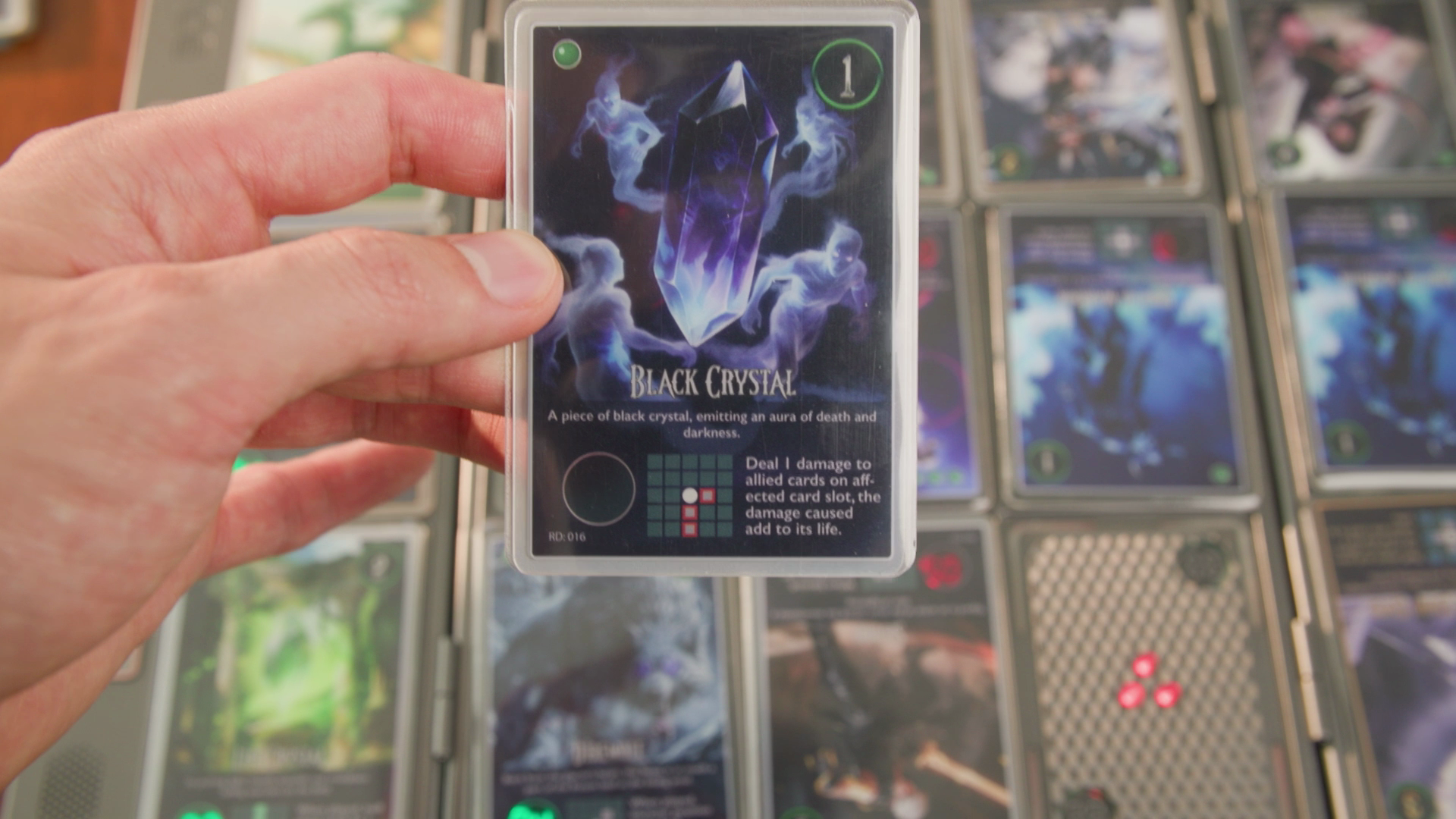
Component Concerns — Possible AI Art?
Placeholder Art seems a bit questionable
We've been told they have a clear AI policy for final artwork, which will be shown on the kickstarter
We've been shown their creation process for important cards on their discord
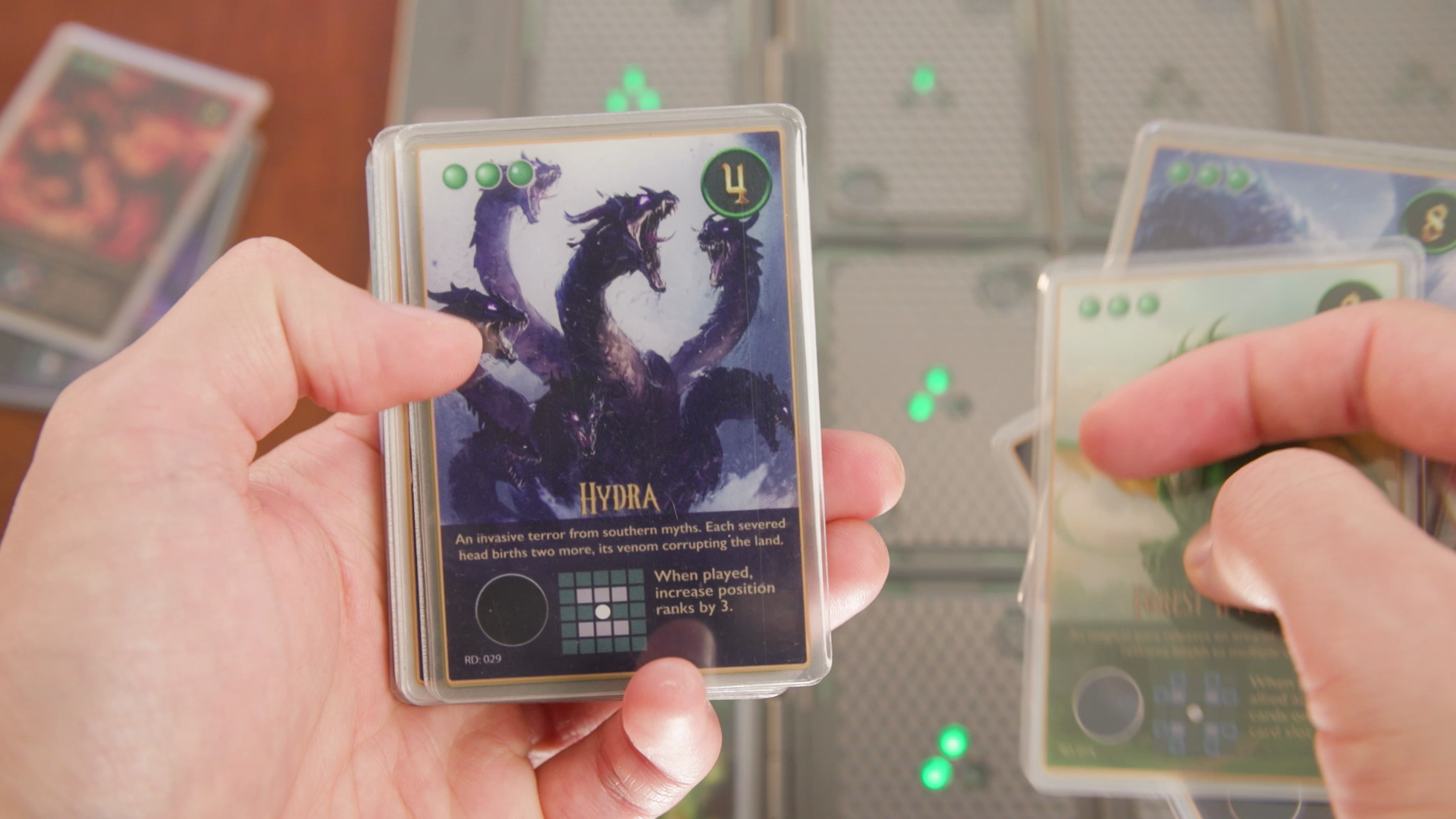
Component Concerns — Card Clarity
Text on cards is very small
Wish the flavor text was all the way on the bottom
Component Concerns — Physical System
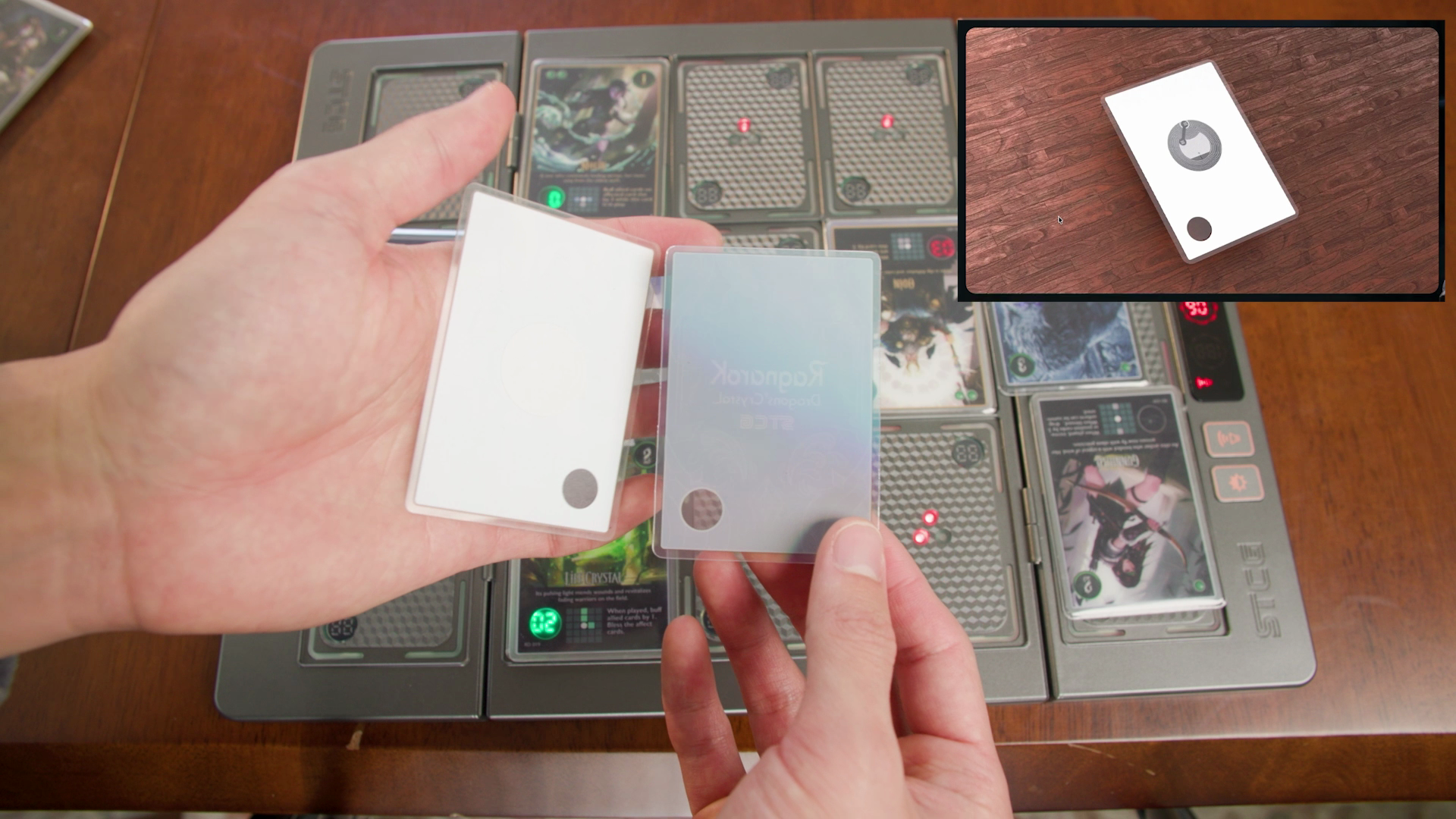
Sometimes some slowness in recognizing what we just played
Sometimes would press play/pass and the system wouldn’t recognize it
Void Stalker totally bugged the game for us once
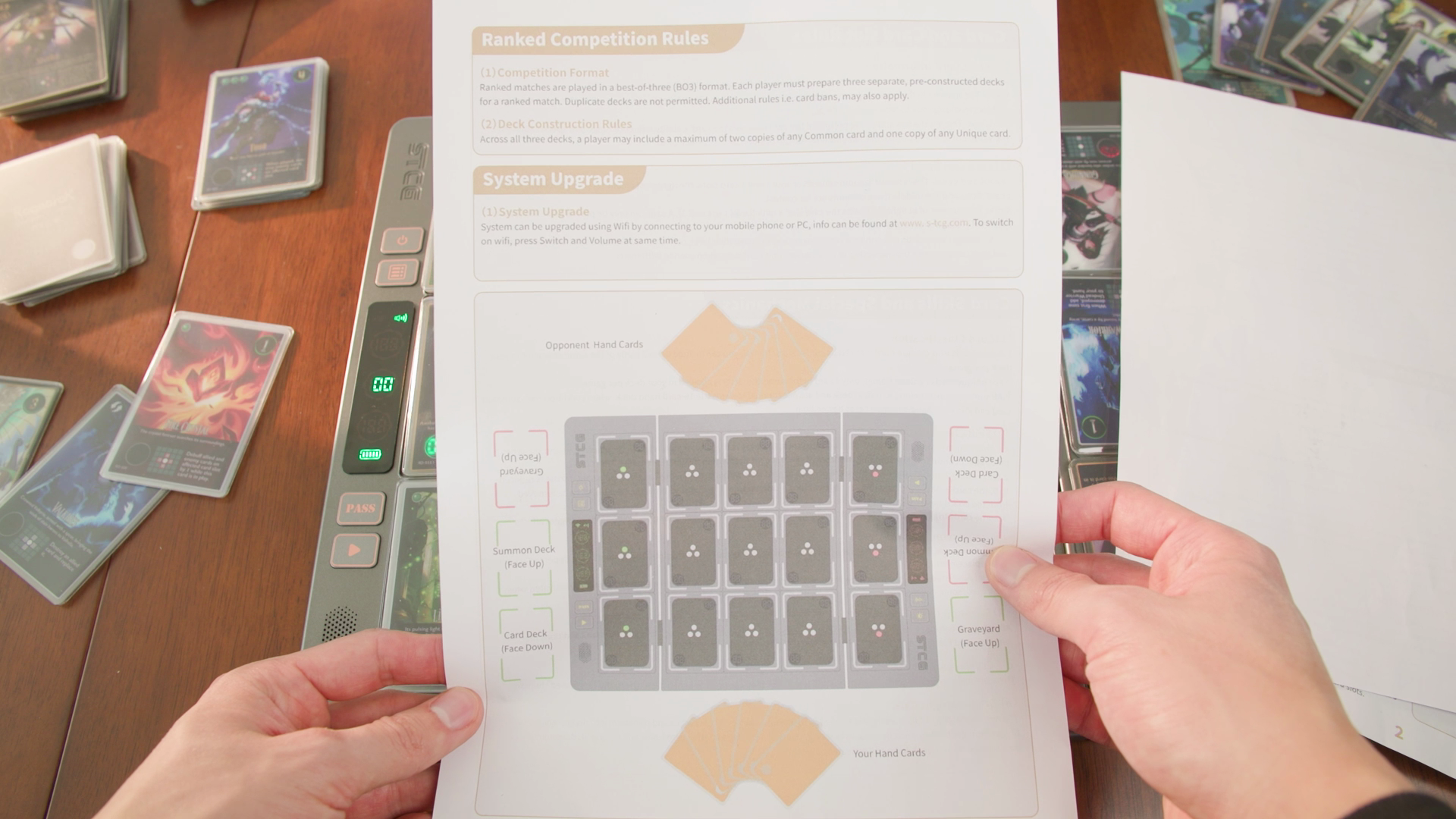
NOTE: Board is patch-able via Wifi, and Void Stalker bug has allegedly been fixed
Component Concerns — Rules
5 pages of rules don’t make much sense
A lot of the wording on cards could be improved and clarified
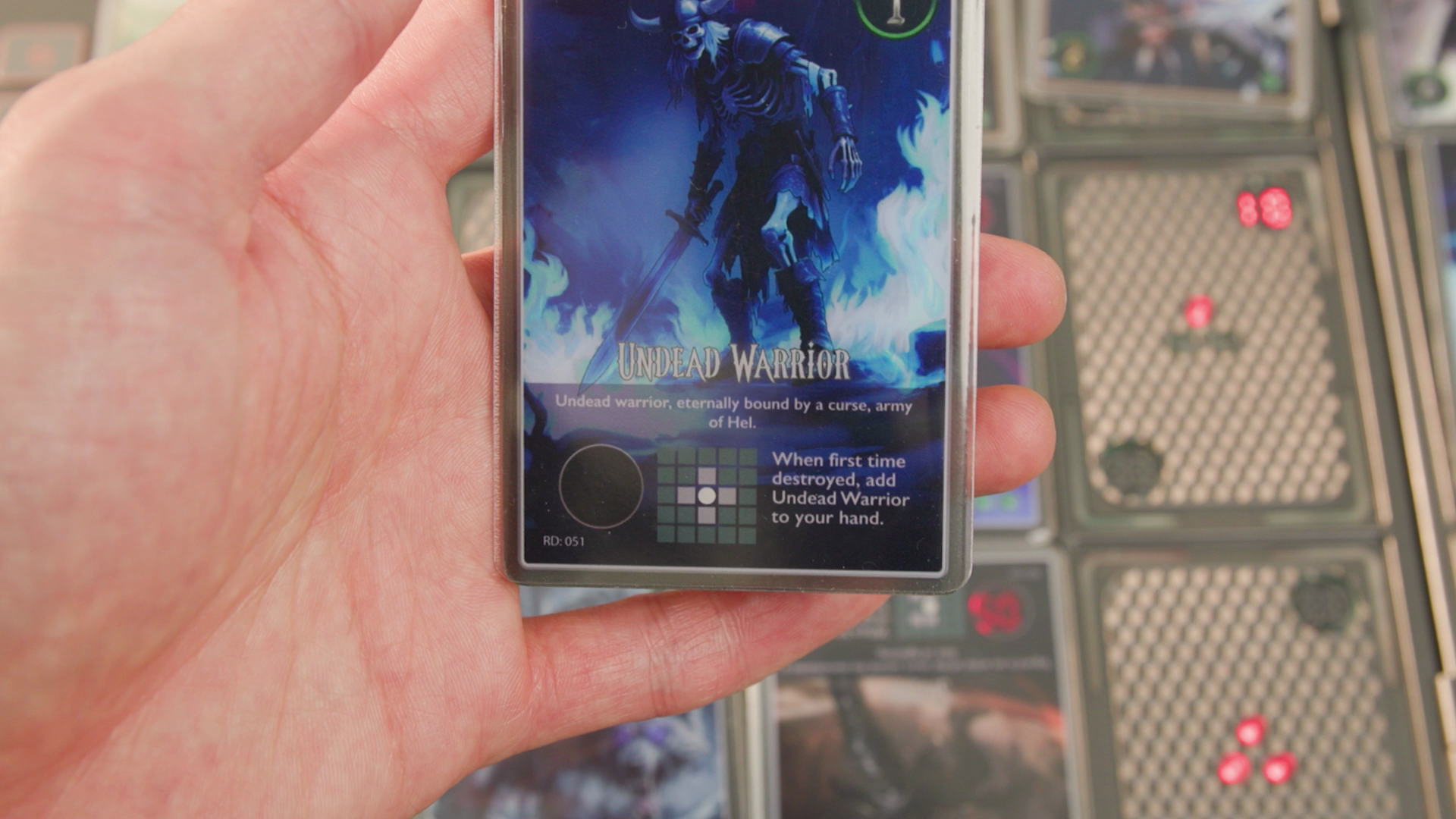
e.g. Undead Warrior implying that it might be from your deck to hand
e.g. Dragonform cards should have some type of Dragonform symbol
OVERALL THOUGHTS
For a tentative or impressions score, I have no idea how to really score this, because this is SO early stage. We’ve been given 50 cards as opposed to the 2 starter decks being 40 cards in total, so we just kind of made up own decks and we thought the synergies weren’t exactly aligned. But also, we’re not gonna weight too much on that because everything is subject to change? So we can just talk about the overall system here!
Because it is really novel, I mean it’s pretty unusual for board and card games to have this level of technology put into them. While it’s fascinating to us as a board game medium, of course the tech here in the scope of 2026 isn’t anything that special. NFC isn’t anything new, then flashing lights and sound effects even less so.
My hunch is that they probably saw an opening of this cross between digital card games like Hearthstone, Shadowverse, etc etc, maybe even turn based games like TFT, and then said, why don’t we create something with that level of customization and artistic flair, but do it in a physical game form, and still microtransact heavily through boosters?
I stumbled upon Queen’s Blood in the FF7 remake while writing this script, and noticed that the whole board layout, and level grabbing is the exact same thing! And the win condition is the exact same thing!
Now I haven’t played that game, I’ve just seen some gameplay footage, but it seems like Smart TCG is a really nice innovation on top of that. Because that game was only against bots being a mini-game, and didn’t have the interesting pass mechanic or board removal from what I’ve seen. But mostly, Queen’s Blood didn’t have Replacement, which really starts opening the board in Smart TCG!
In Queen’s Blood, people also complained that going 2nd mattered too much, but in Smart TCG, with replacement and generally more abilities on cards, I don’t think strict turn order matters as much, instead it’s likely more on deck design, like if you want to rush Hel, you’ll probably want to go first.
But of course with all things card games and now with this new tech layer on top of it, calling it cool and elegant is by far not the end of the story. There’s clear love put into this, but we have to be a little cautious about how this will perform in the future. With mechanics like replacing, graveyard recursion, and mass buffing, we’d have to see what the future holds in how abuse-able these might be. But the core mechanics seem definitely fine so far, and its biggest strength is that it’s probably exactly what it looks like - a TCG literally played on a board that does the management for you!