-
![]()
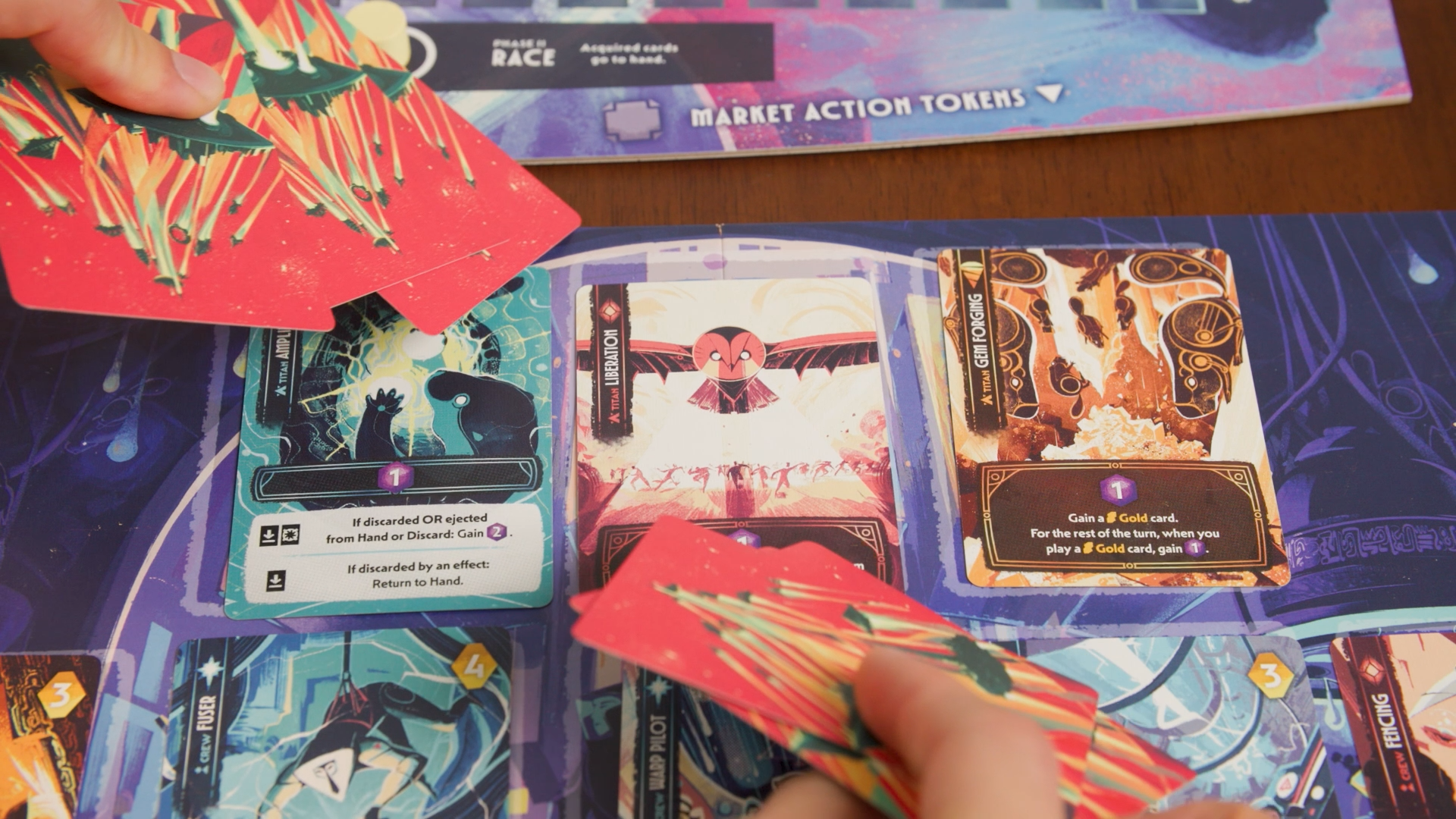
Bid for powerful Titan cards!
-
![]()
Build powerful synergies between crew and Titans!
-
![]()
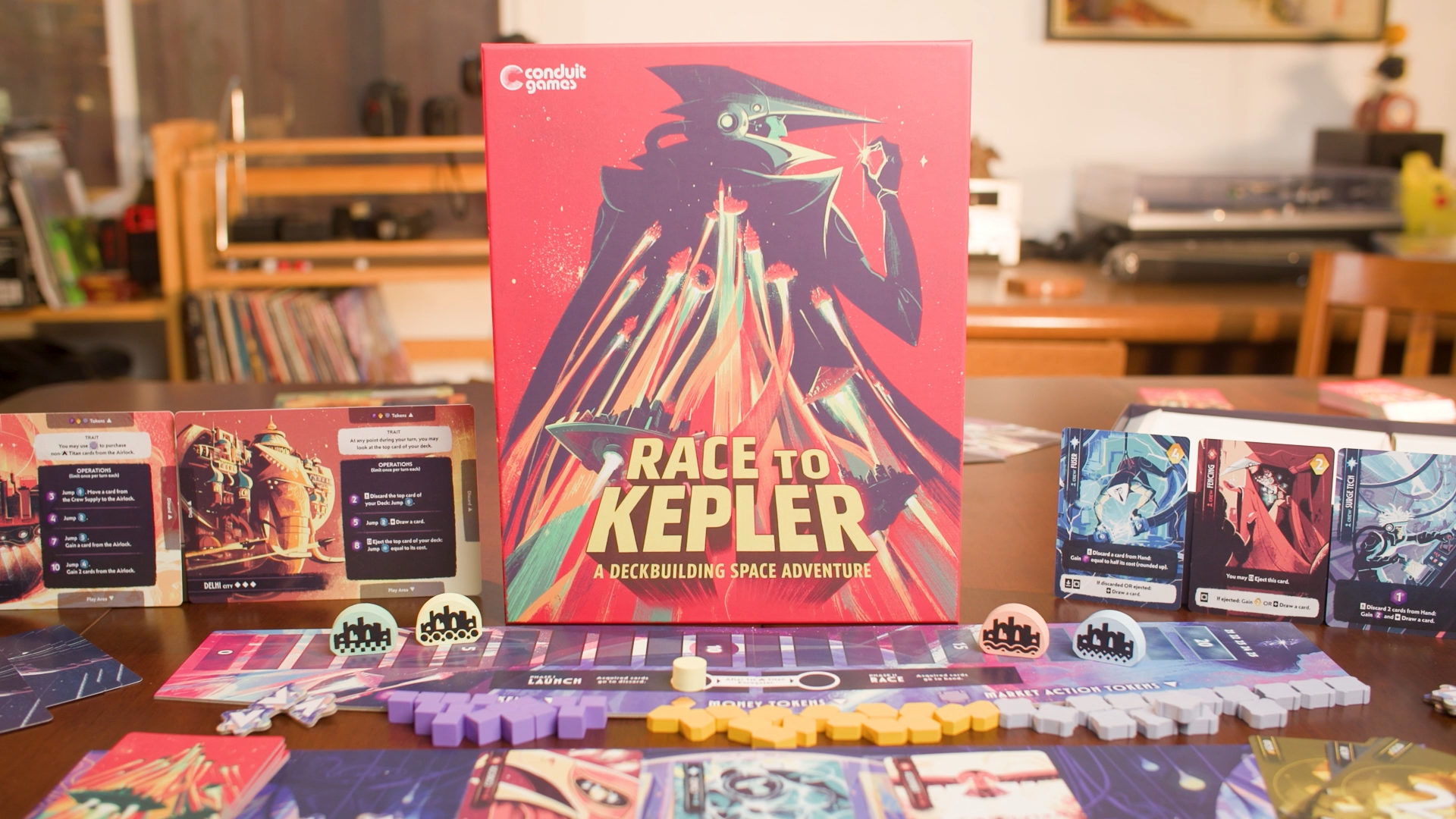
Be the first city to win the Race to Kepler!
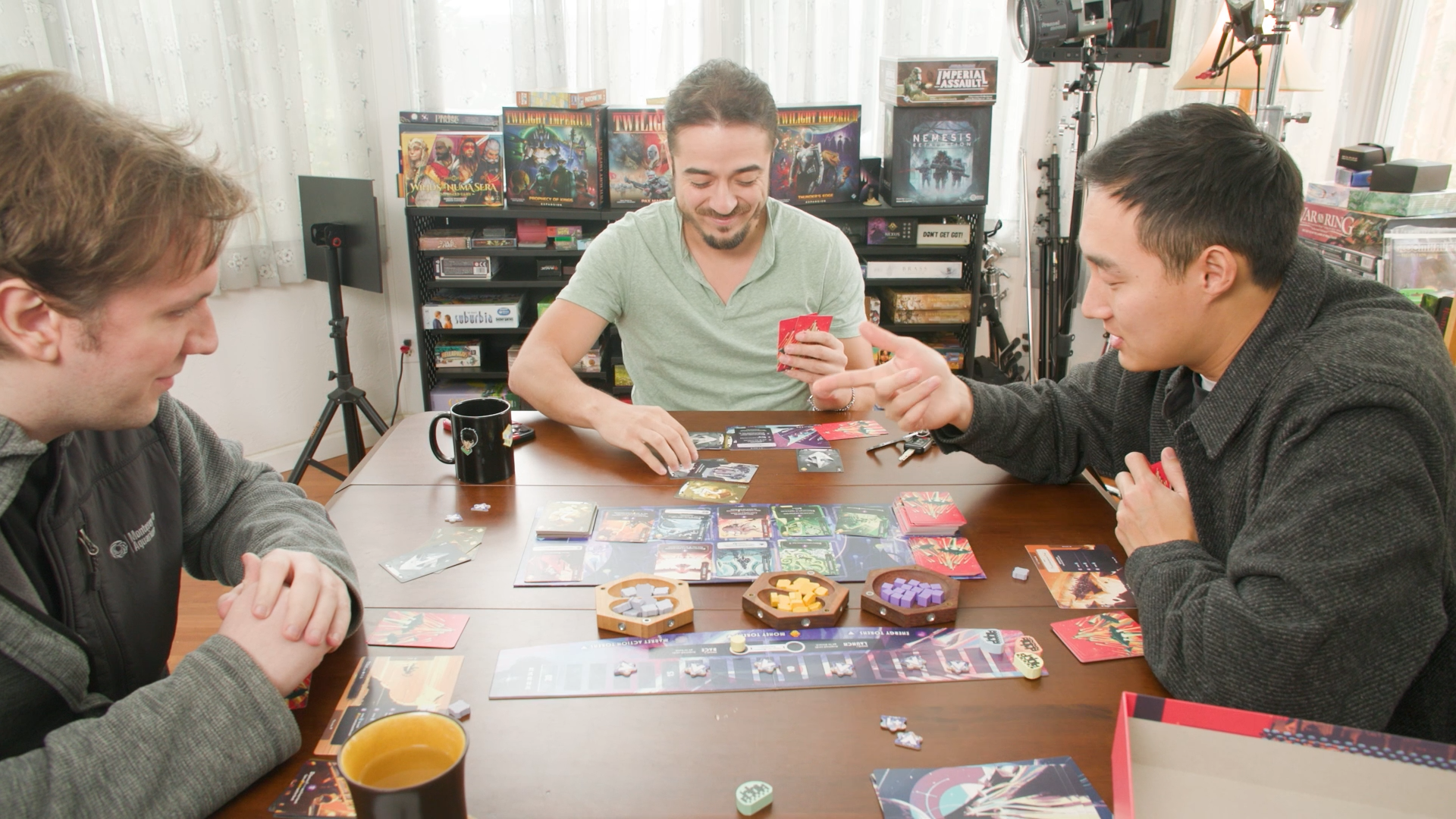
How many times played
2 Player: 2x
3 Player: 2x
Need to learn how to play? Or want more reasoning for our points? Our review video’s got you!
Component Pros
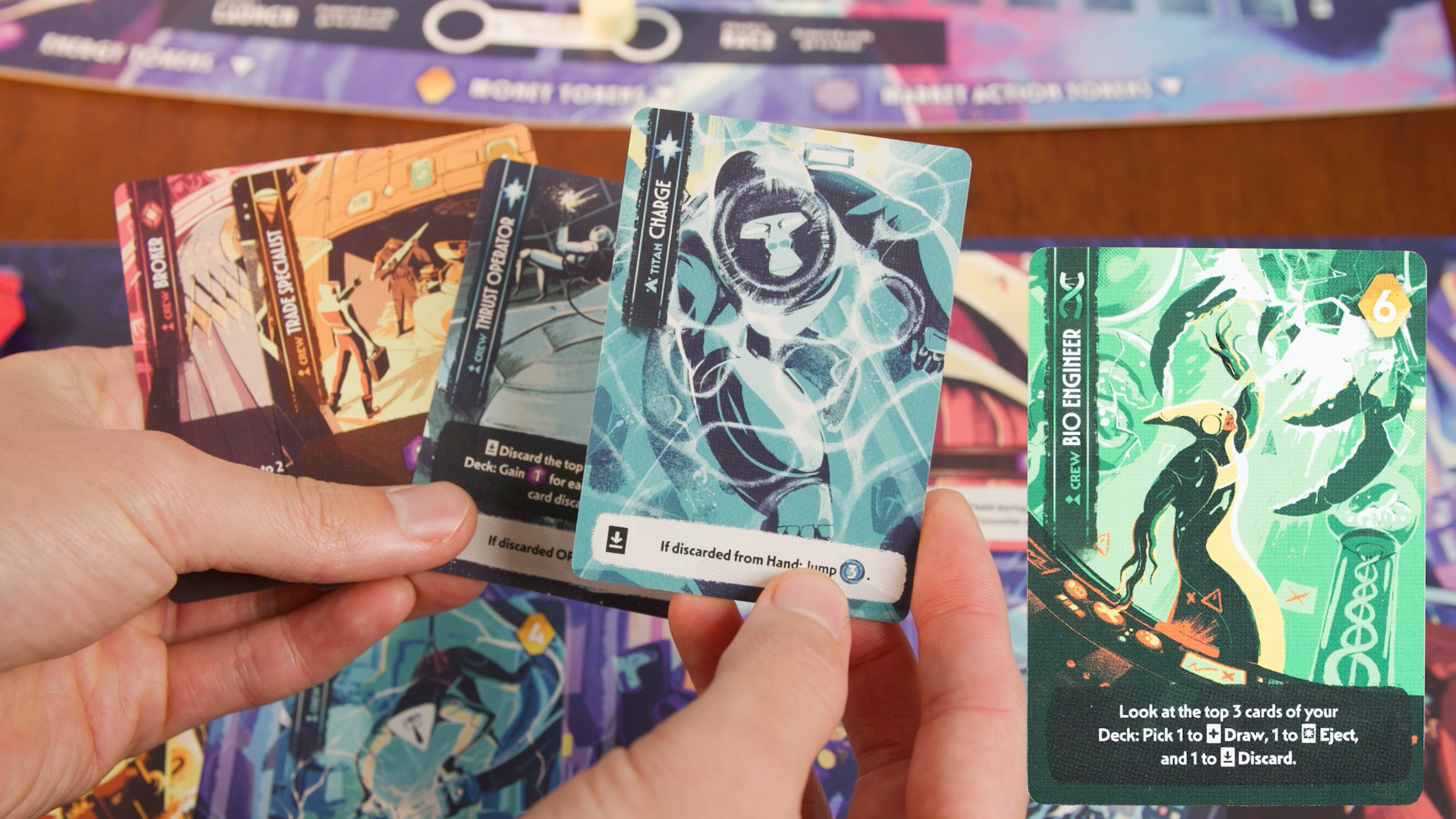
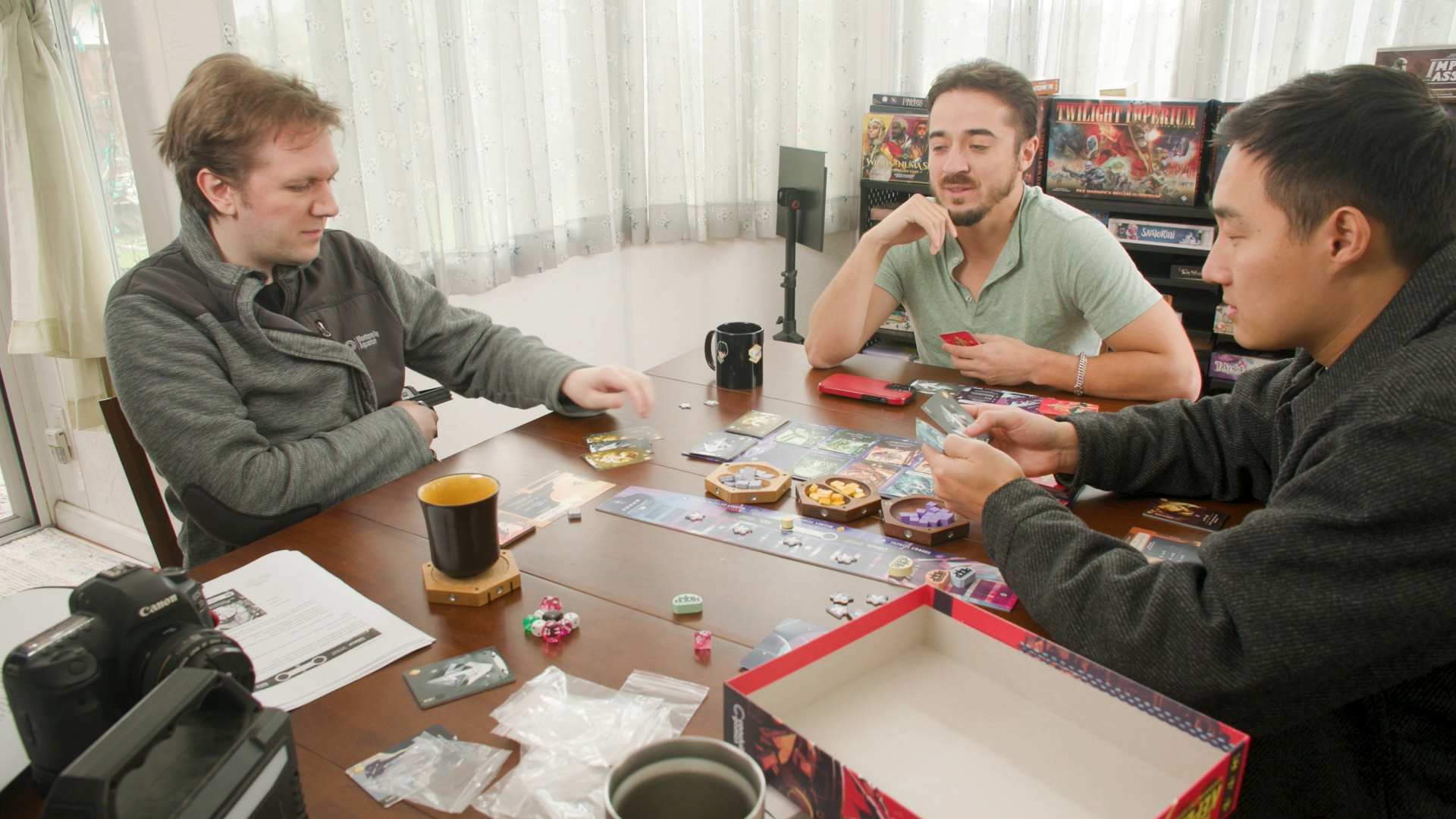
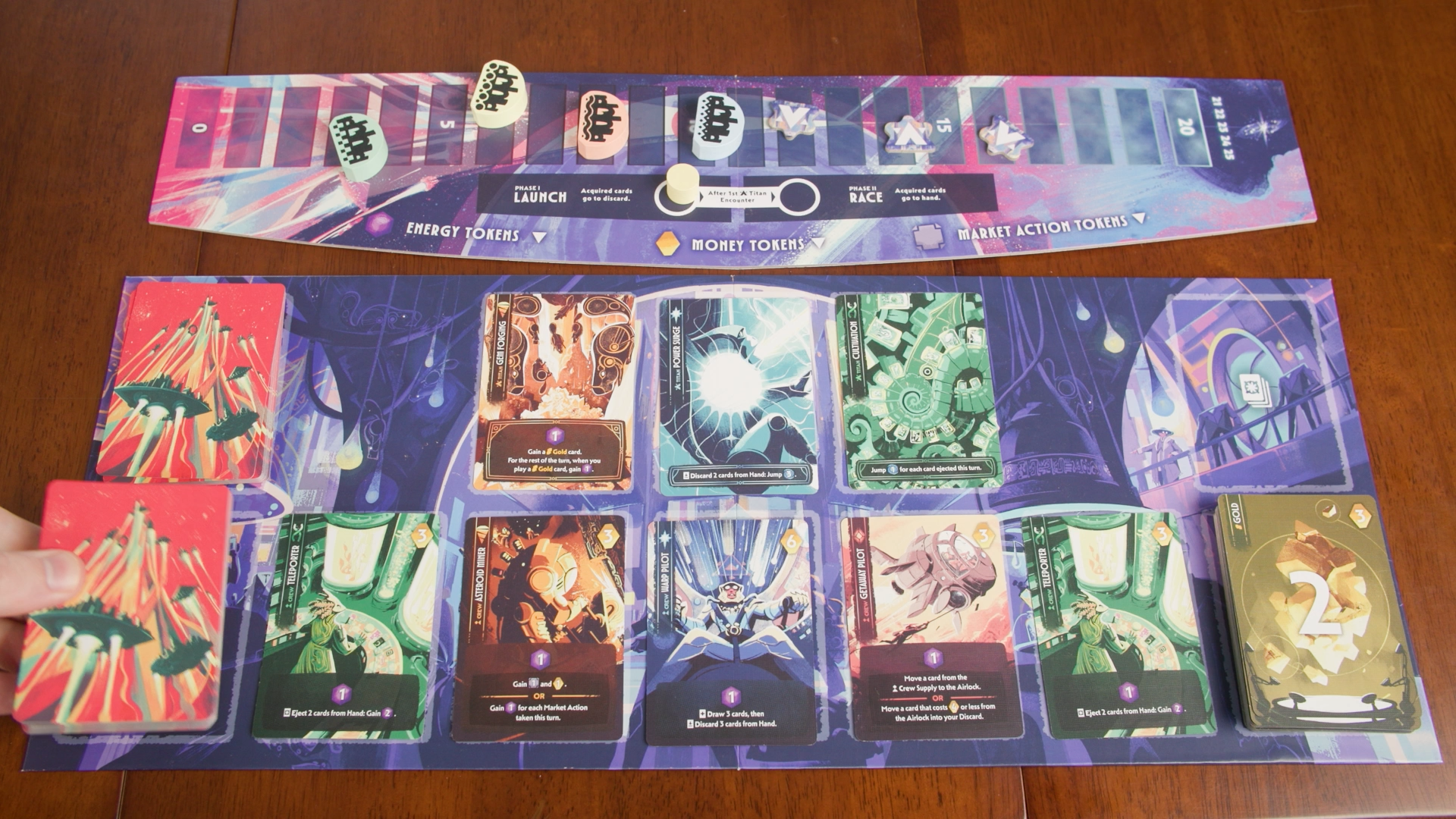
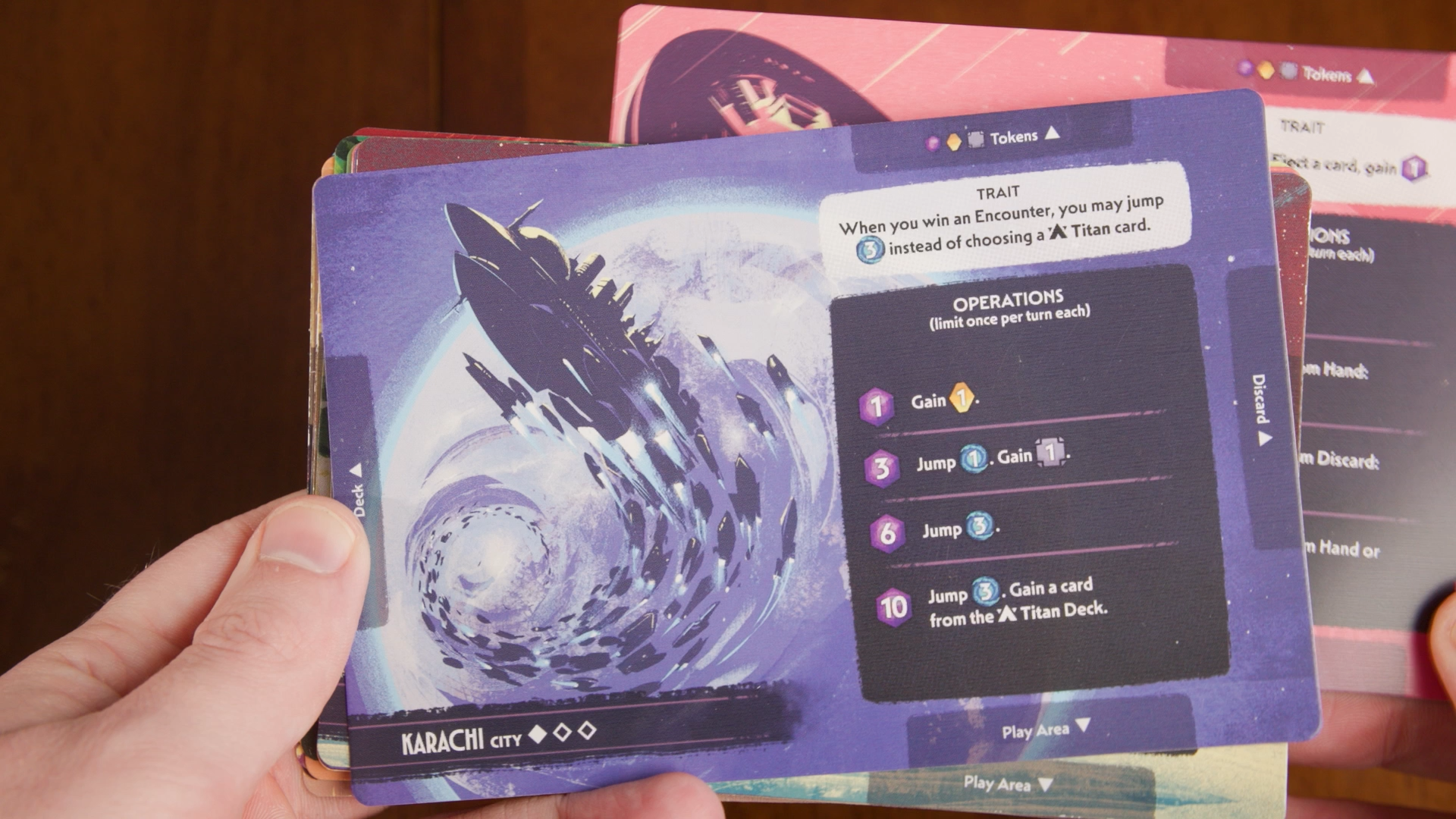
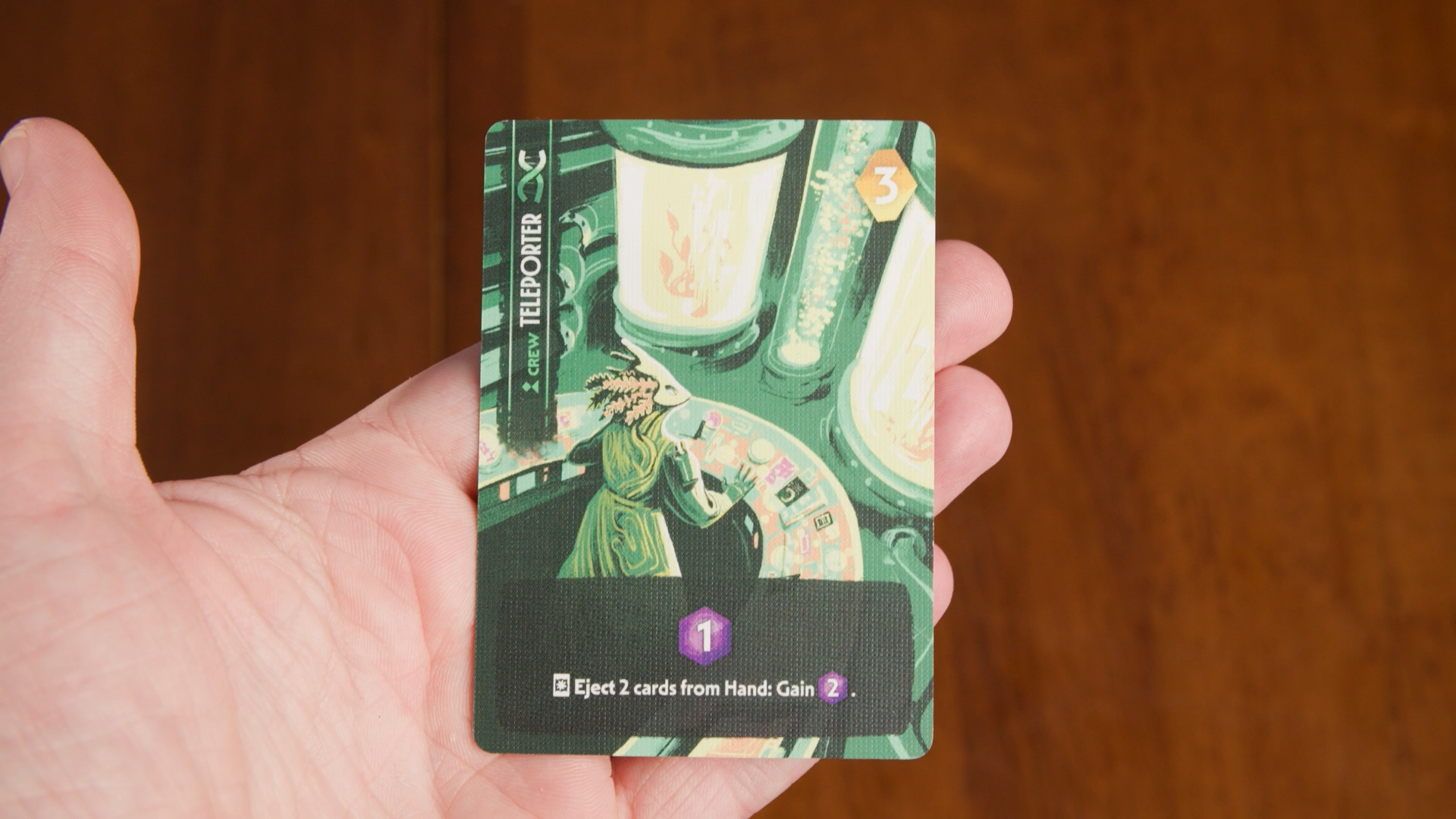
Bright sci-fi color palette across the board and cards that makes the theme come alive
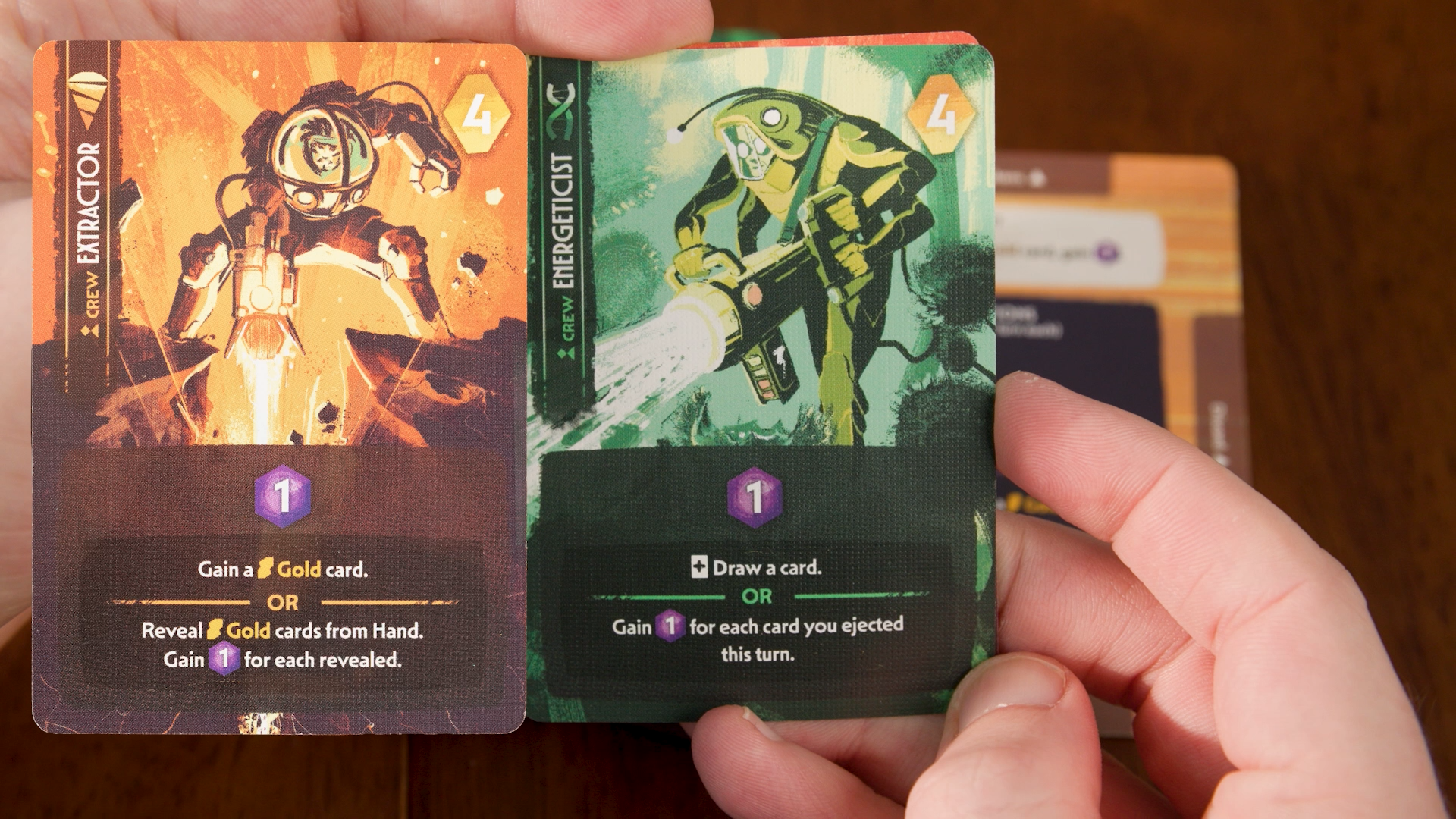
Uniform card style, with clear category color separation for the crew cards
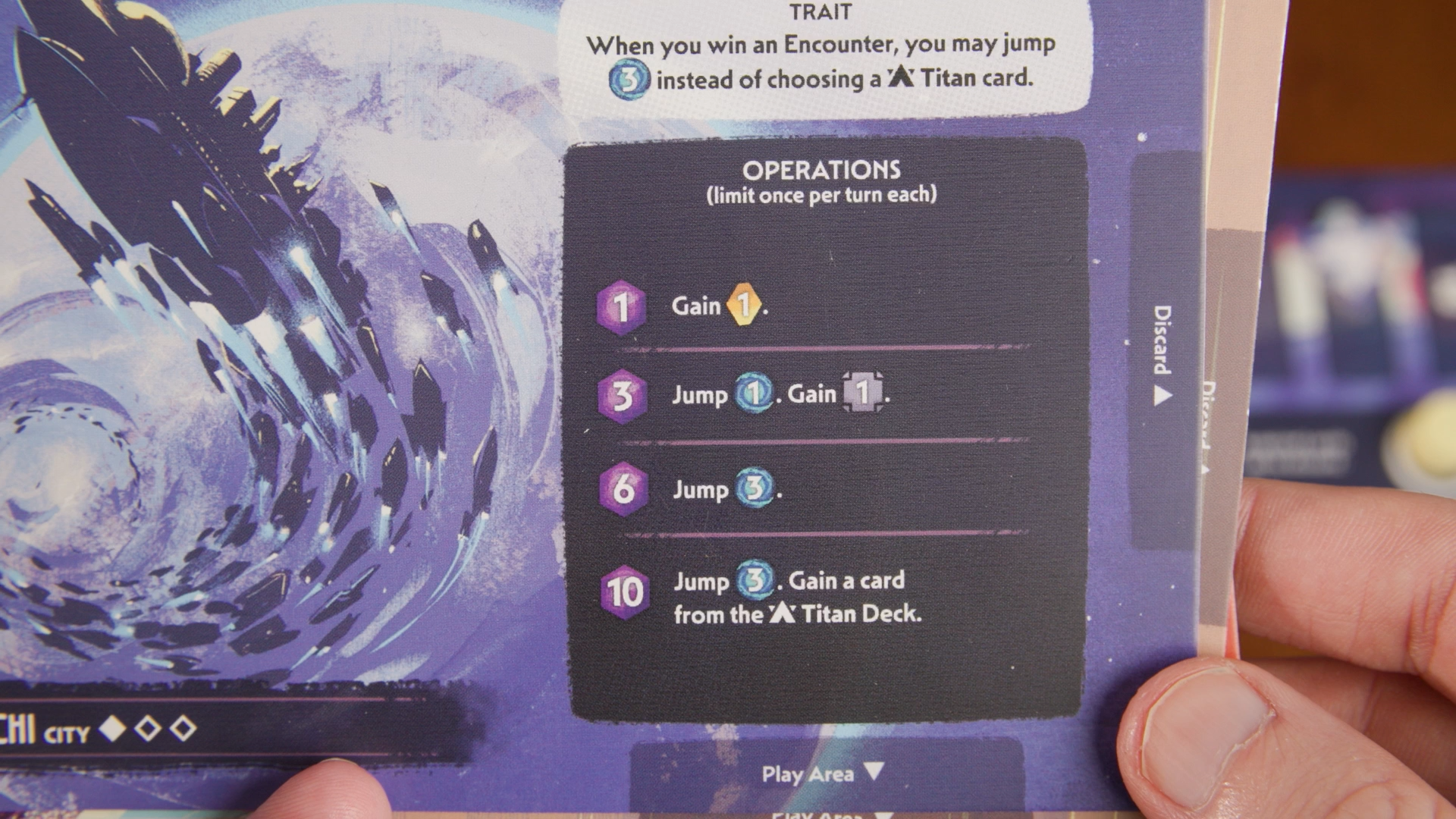
Symbols are clear and intuitive, including the icons, energy, and buying/market cues
The nice wooden components are easy to use, its fun to move your city-pawn along the race track, and the cards are high quality
Easy setup for what it is: board, ships, starting decks, and five cards in the middle
If you know Dominion or Dune Imperium, it teaches quickly
The main “new” teaching point is the Titan bidding mechanic and the buy-to-discard vs buy-to-hand shift later
Gameplay Pros - Combos and Deckbuilding and Titans oh my!
Concise deckbuilding that hits fast and furious with an easy-to-learn gameplay loop: draw 5, play cards, buy, discard, repeat
Buying a card usually puts it into your hand right away, so you can play it immediately and this reinforces the combo feel
Unlimited early-game buys speeds up the game to get to the fun
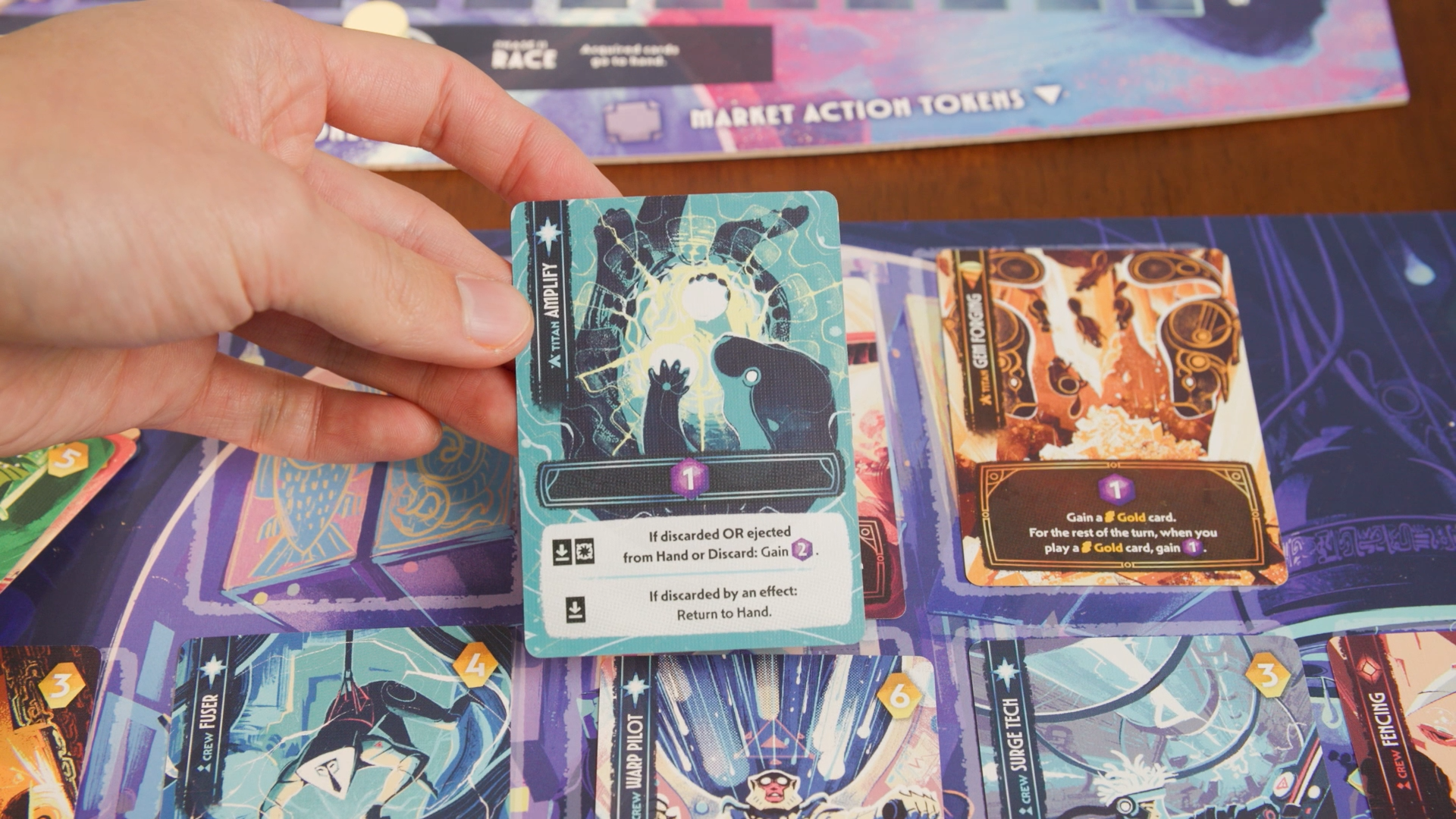
Many cards offer multiple options or value when discarded/ejected, so hands feel less dead
Gameplay Pros - Clean win condition and lighter cleanup
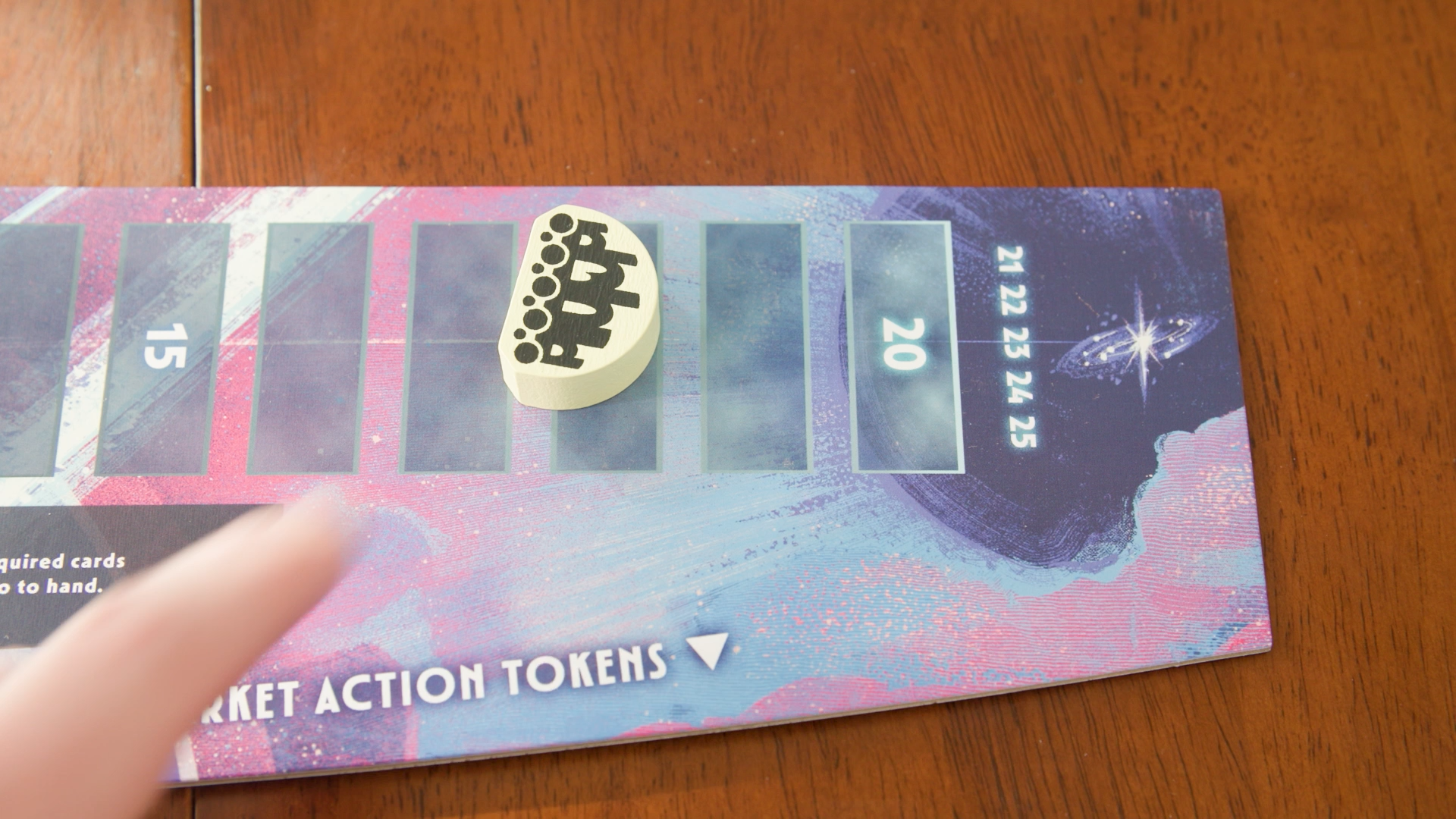
Win condition is obvious and public: reach Kepler (20 distance) and the race ends immediately
No point cards clogging your deck, so cleanup and endgame accounting are easier
City-based resource (energy) clears come turn end, so bookkeeping is low
Gameplay Pros - Titans add interaction, tension, and bluffing
Titans are earned through bidding, creating interaction in a genre that can feel solitary
Titans are high-impact and usually worth fighting for, especially because many grant movement
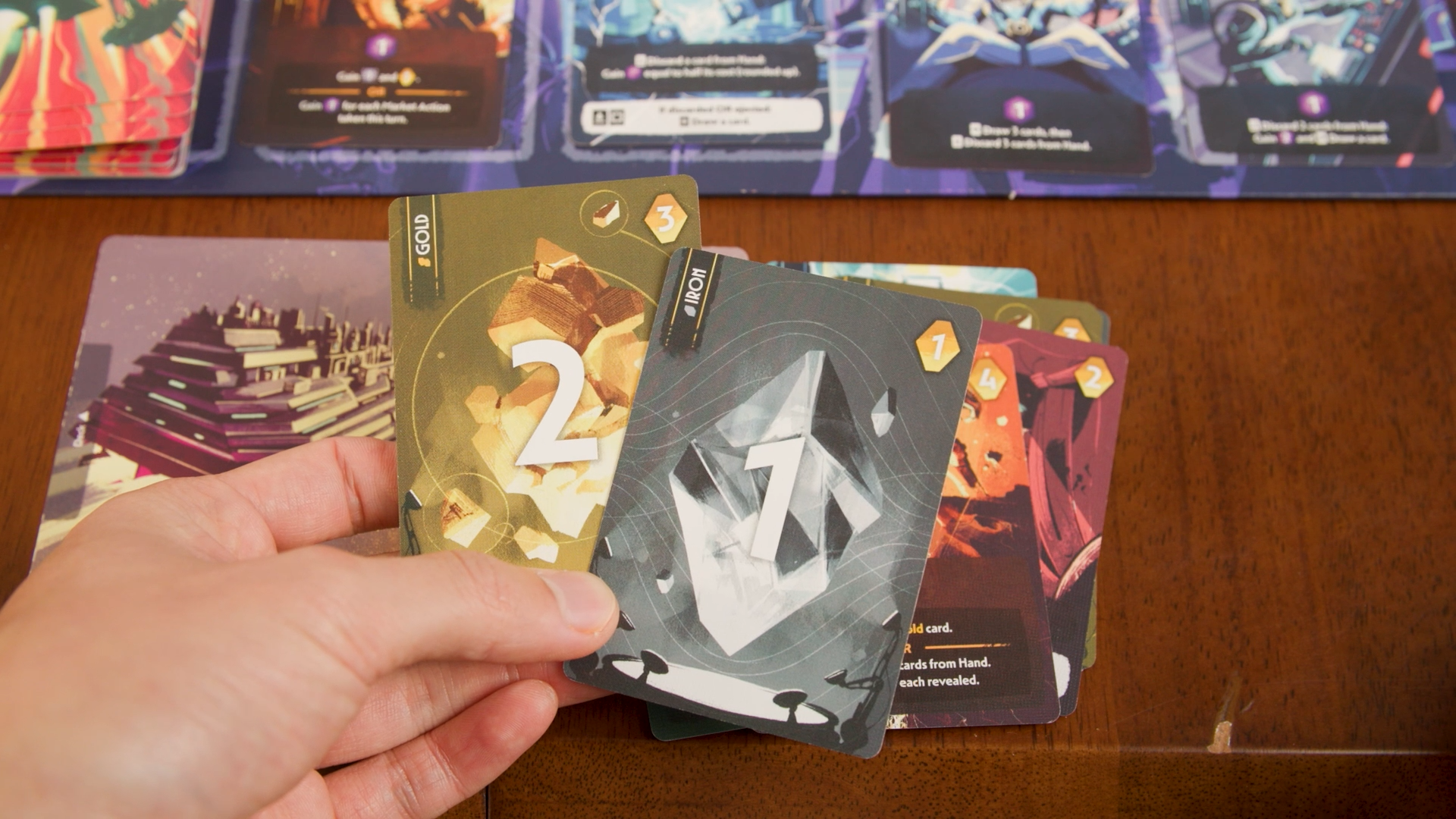
Bluffing system is high tension: a one-card bid could be an iron or a high-value crew card
Bidding thus rewards attention to what opponents bought and trashed
Titans do not help you bid for future Titans, so collecting Titans slightly weakens future bidding power
Combo paths and strategic variety
Gold-focused engines are real: buy gold, play gold, and build around gold synergies
Mass-buy strategies exist, including rewards for buying multiple cards in a turn
Eject-focused engines can create “double payoffs” where the ejection both triggers benefits and ejects a card that wants to be ejected
Airlock manipulation can move cards out of the market and later pick them up cheaper or free
The game changes feel after the first Titan marker: buys go into hand and bids become central
Cities add meaningful asymmetry and replayability, with 15 cities in the base box that push different deckbuilding priorities
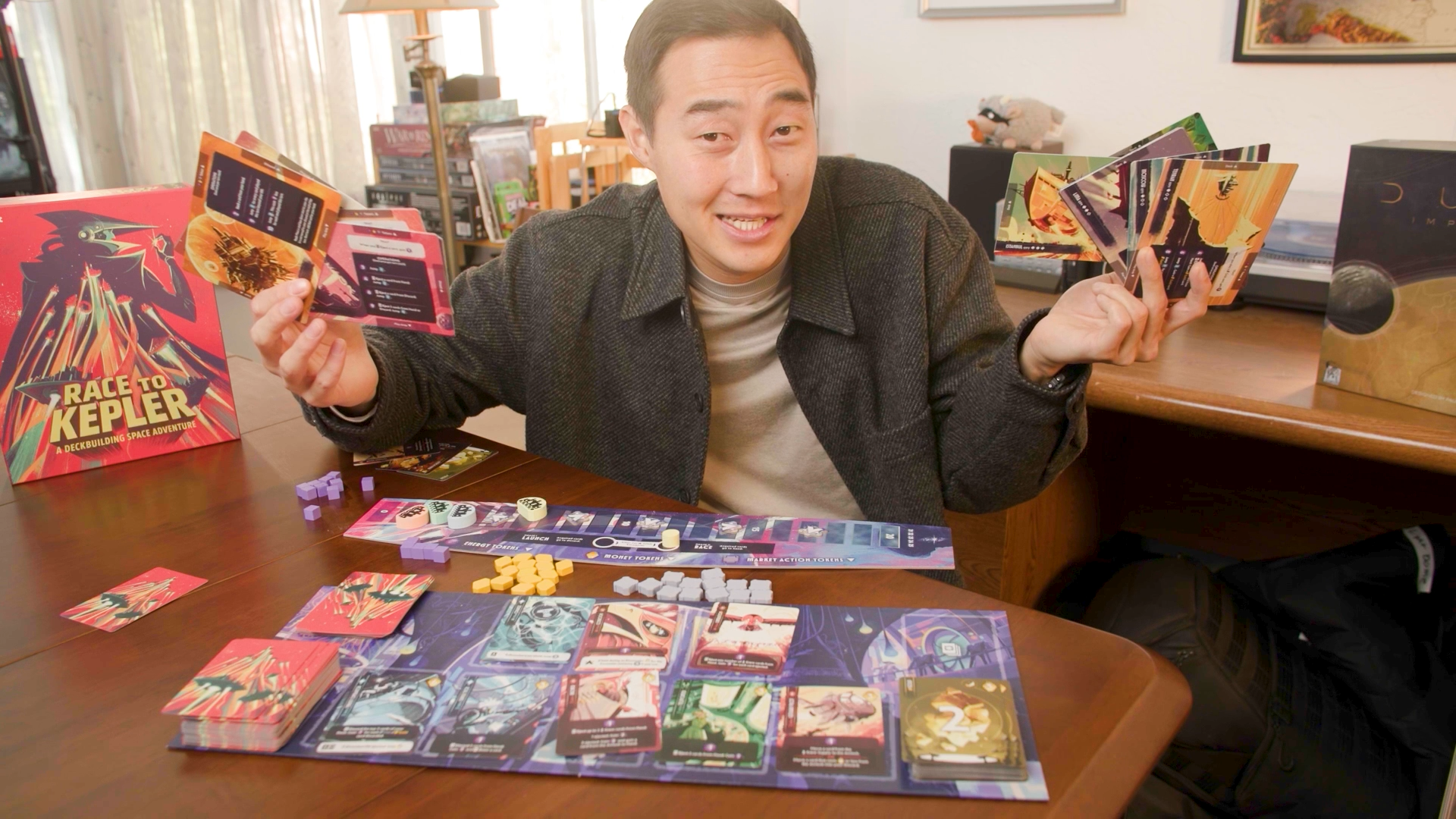

Component Cons - Prototype Woes
Rulebook is not finalized: it should be explained what happens if you cross another Titan marker as a result of winning a bid
Titan marker placement on the board should be clearer in the rules or just printed on the board itself
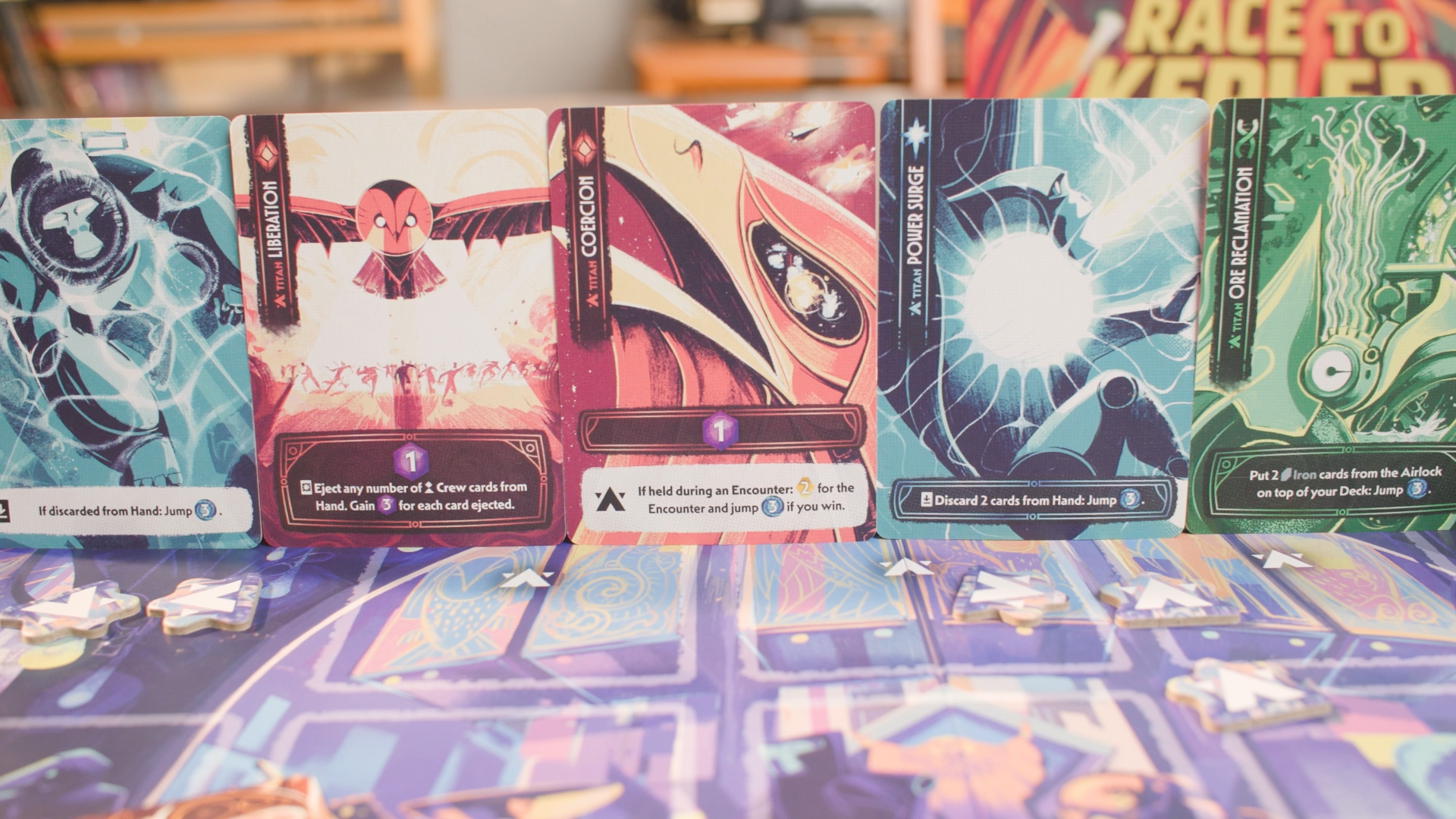
Titans do not stand out enough. They can blend into your hand visually
Some Titan bottom text is small, and thus the overall look does not fully sell “big, imposing Titan”
Gameplay Cons - Thematic friction
The Titan theme is a bit off if you think about it: you “prove worth” through bidding with gold, but it’s unclear why Titans would care
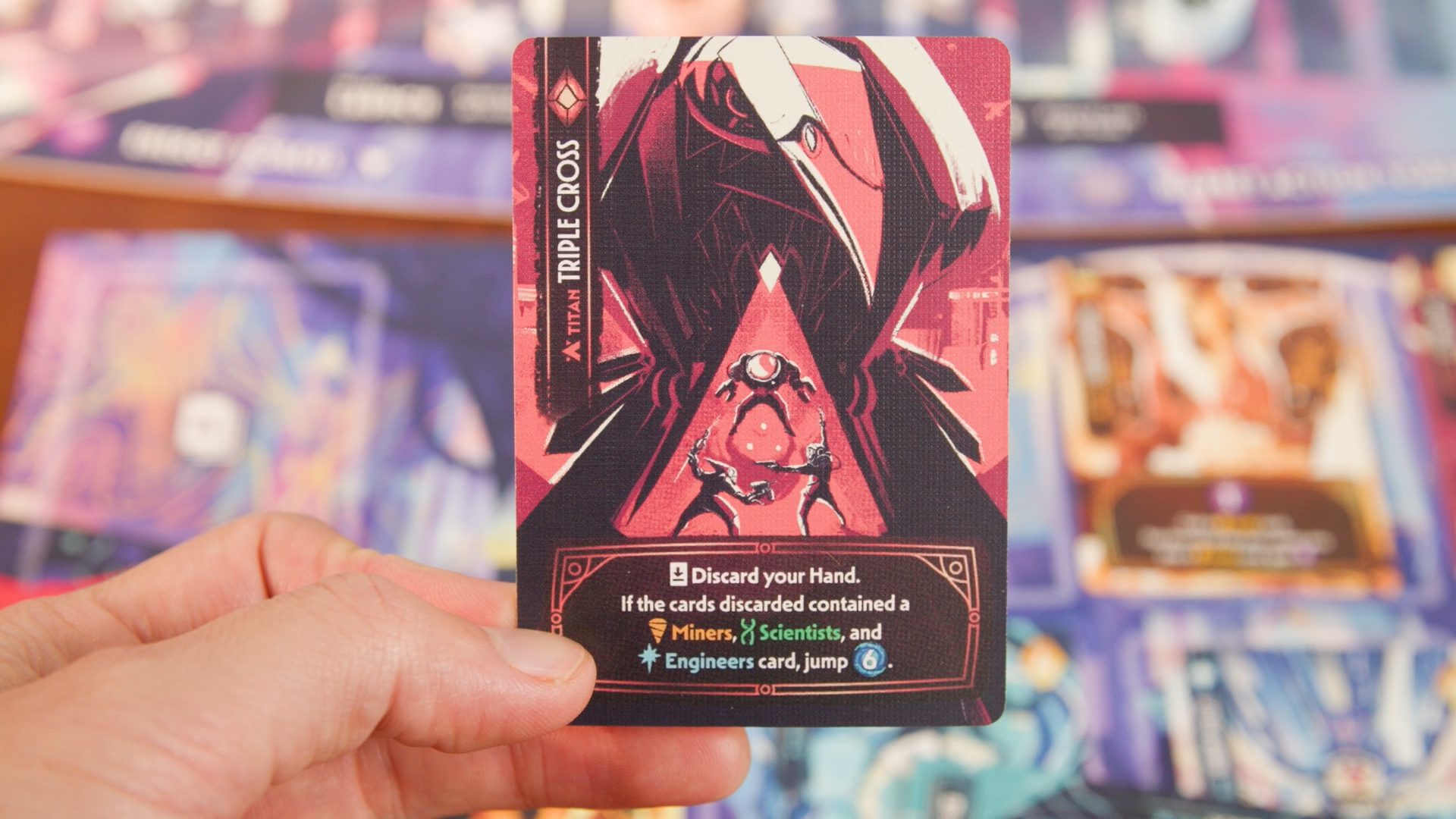
Some of the Titan names read like actions rather than entities, which can be a little odd (example: “Triple Cross”)
A small addition of some flavor text in the finalized rulebook could likely patch these issues.
Gameplay Cons - Swingy Systems
Winners of a bid get a Titan card immediately and can use it right away (which feels great)!
Losers discard their bid cards and get nothing, which can utterly erase a turn if their bid was large
In our games, a mid-game critical bid win often lead to that same player winning the race to Kepler
Our suggestion is to introduce a consolation prize for losers
Perhaps return half the bid cards to hand, rounded down, favoring gold/iron over crew cards upon losing a bid
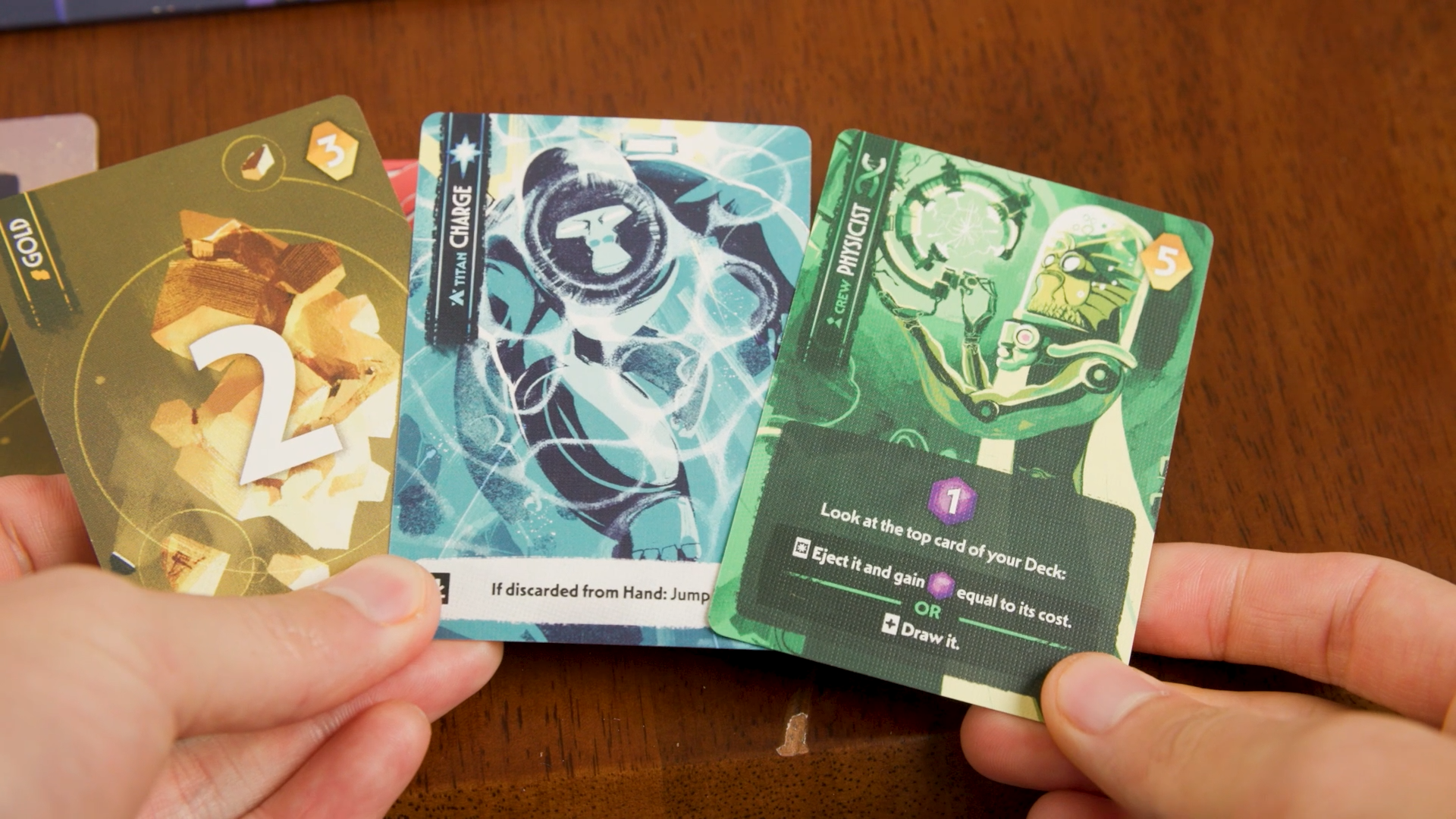
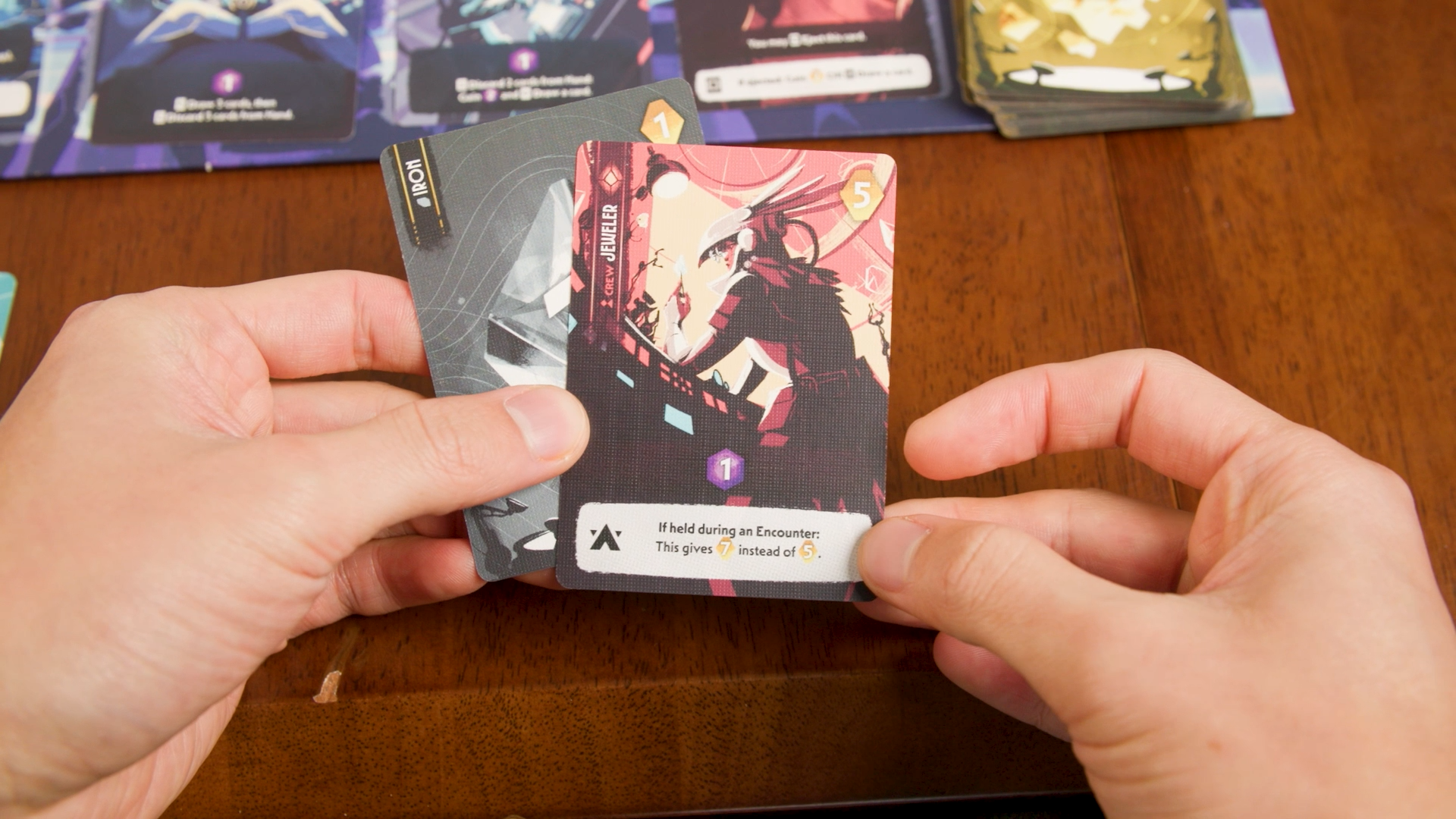
The Jewelers card is a first-time-player gotcha because it behaves differently in bidding value and can bait overbids
In 2-player games, the opener is pressured to bid something, otherwise the opponent is allowed to take a Titan for almost nothing.
Our suggestion is to reveal two crew cards and use their combined value as a baseline bid in 2-player games.
Tentative Score - 8/10 Great
This is a score for the prototype of Race to Kepler, weighing the pros and cons against the audience it’s meant for: deckbuilding players who want a step up in complexity, but do not want more phases, heavier overhead, or a pile of extra systems. For that crowd, Race to Kepler earns an 8/10. It meaningfully addresses the low-interaction problem in simpler deckbuilders by adding bidding, and it gets to the combo point fast. It is also easy, if not easier, to set up and teach than many deckbuilders. At $40 for the standard Kickstarter, the value is excellent. (If you want the nicer wooden pieces, that’s in the $80 tier.)
The trade-off is that bidding is inherently swingy, and the game encourages comboing hard. That creates more room for downtime at four players, because there is no simultaneous play. Even if this is not framed as a “con,” you should expect turns where someone is working through crew buys and trying to squeeze the last bit of efficiency to hit an 8-plus energy threshold so their city can pop off.
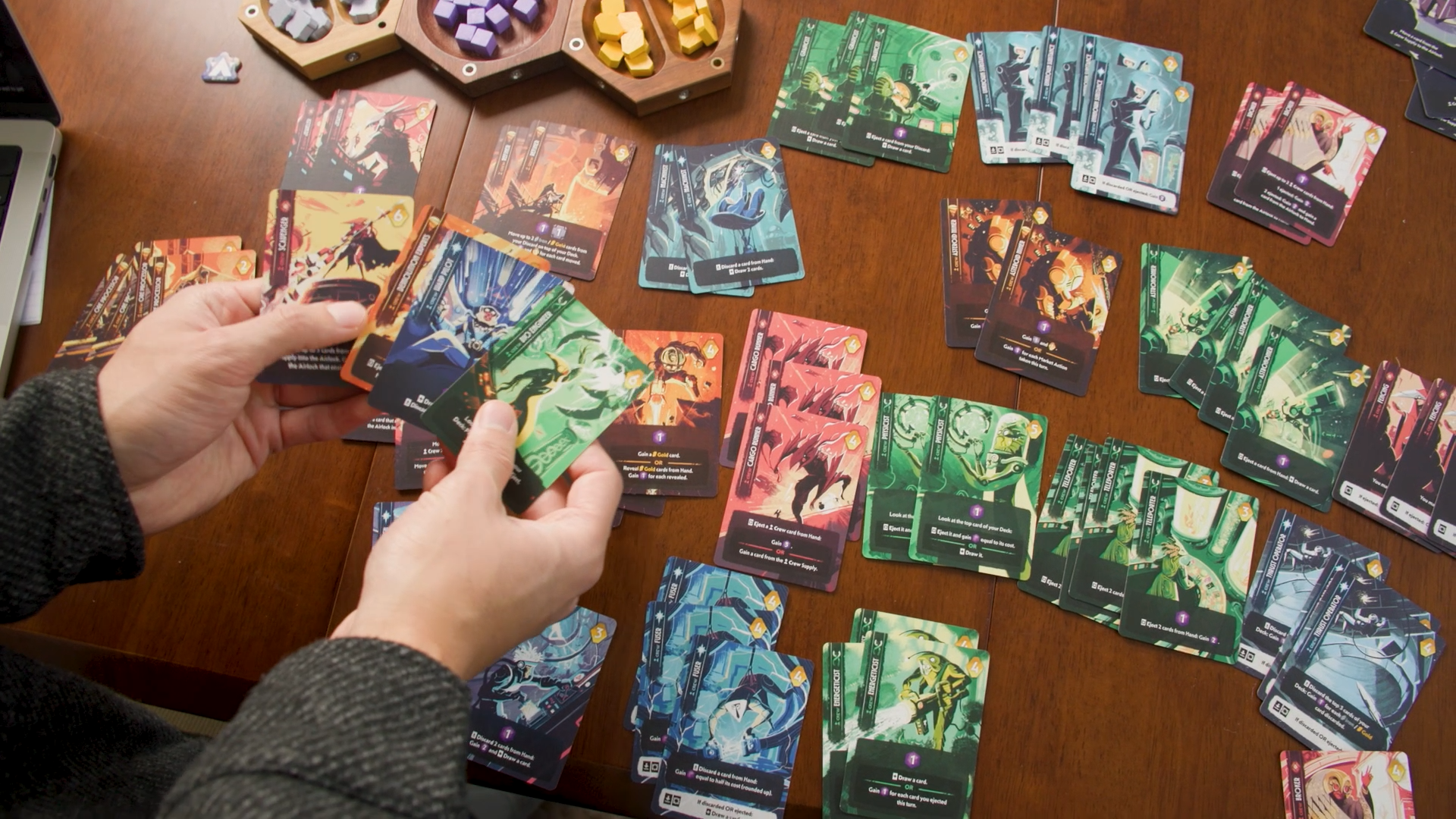
Randomness also matters. The central market is random, which injects uncertainty into buying. There are between 1 and 4 copies of each crew card (1 copy for the 6-cost crew cards, and 4 copies for the 2-cost ones). Titans are random, and what you draw for the bid is also random. This is not automatically bad, but it is absolutely something you have to be comfortable with.
The big elephant in the room is Dominion 2nd Edition, which we scored an 8/10 because it hits so many sweet spots, especially for a 30-minute game. Race to Kepler is clearly trying to change a few of Dominion’s table-feel realities: it pushes against multiplayer solitaire with bidding, it avoids the “read eight piles” burden by using a smaller rotating market, and your deck does not get muddied with VP cards, so it stays more combo-centric.
The nature of comboing is also different. In Race to Kepler, you generally cannot win by spamming simple buys; the main way to gain distance is through your city, so you must build toward high-energy turns. That engine focus is a big part of what makes it satisfying, and also what creates downtime when several players are doing it back-to-back.
So who is it for? Right now, for 3 to 4 deckbuilding fiends who love combos, track each other just enough to bid well, and actively enjoy bidding as the interaction layer, this prototype is extremely digestible and delivers what it promises. There is very little take-that in the crew cards. The bidding reliably produces interaction in an elegant way, even if it can be swingy.
And given how many deckbuilders sit a step above it in scope, like Lost Ruins of Arnak, Undaunted, Aeon’s End, and Tyrants of the Underdark, Race to Kepler fits as a “day off” deckbuilder: jump in, start comboing quickly, add tense bidding on top, enjoy the city asymmetry, and then someone hits 20 distance and ends the race.